Ask most people what they consider to be the world’s most famous road, and they’ll likely say Route 66. So too will Google, for that matter. Other famous roads, the search engine adds, include Australia’s Great Ocean Road, Paris’ Champs-Élysées and London’s Abbey Road, all notable in their own right, but which, realistically, pale into insignificance when compared to the hallowed highway affectionately dubbed ‘Main Street of America’.
The 2,448-mile road, which intersects eight states and three different time zones, celebrates its centenary in 2026, and its star is showing little sign of fading. Bear in mind, Route 66 was officially decommissioned and removed from the United States’ Federal Highway System over 40 years ago. What we’re actually talking about is a relic of a bygone era, a strip of tarmac steamrolled in history – one that’s left an indelible impact on the American psyche.


“Over the past 100 years, Route 66 has exhibited the American spirit of economic drive, freedom and adventure,” says Bill Thomas of the US Route 66 Centennial Commission. “In many ways, the road became a symbol for the American Dream, and in later life the ultimate bucket-list road trip.”
Indeed, it’s a road trip quite like no other. It might not be as long as Route 20, or as easy on the eye as Pacific Coast Highway or Blue Ridge Parkway, but it is more stirring, varied, poignant and, more importantly, fun. The US National Park Service describes Route 66 as “slicing across the continent, revealing the process of historical change that transformed the lives of people, their communities and the nation. This fabled highway connects not only the East and the West, but also the past and the present.”

To fully appreciate Route 66, Thomas says, it’s worth knowing a little of its history, something that the Centennial Commission will endeavour to share throughout the upcoming year-long celebrations. Thomas is also Chair of Route 66 Road Ahead Partnership, an NGO working to preserve and promote the historic highway, and currently partnering with the National Trust for Historic Preservation to make Route 66 a National Historic Trail, ensuring its legacy is safeguarded by permanent federal designation. It’s an important measure when you consider that in 2008 the World Monuments Fund included Route 66 on its ‘Watch List of 100 Most Endangered Sites’.
US Route 66 was the brainchild of Oklahoma businessman Cyrus Avery, a cobbling together of existing local, state and national roads, advertised as “the shortest, best and most scenic route from Chicago through St Louis to Los Angeles”. It was designed to connect rural and urban centres, while meeting the growing demand for automobile transportation, yet it was mainly disaster that fuelled the road’s early success. During the Great Depression and the Dust Bowl of the 1930s, US Route 66 became a major migration route for hundreds of thousands of displaced families from the Midwest and Plains states heading west to California – the land of opportunity. It soon became known as the ‘road of dreams’, a thoroughfare paved in hope, lined by small businesses keen to provide fuel, food and lodgings. It was a means to an end, or, as Steinbeck put it in The Grapes of Wrath, “66 is the mother road… the path of a people in flight.”

But, of course, this wasn’t the Route 66 that the world fell in love with; that Bobby Troupe, Nat King Cole, The Rolling Stones and Depeche Mode famously got their kicks on; that Jack Kerouac immortalised in On the Road; or that Disney Pixar used as the backdrop for its animated movie Cars – which, if you ask Thomas, is “Without a doubt, the [highway’s] most notable cultural mention of the past 20 years.” He adds, “Not only did the film capture the feel and vibe of Route 66, it also introduced a new generation of children to the Mother Road, children who have now grown up and are out there travelling Route 66 because of their fond memories of the film.”
Route 66 became the vision of a free-wheeling beatnik America in the decade after World War II, during which time the number of cars on the roads doubled, and the idea of driving off into the sunset caught the country’s collective imagination. But just as quickly as the highway’s postcard-worthy gas stations and motels, neon signs and half-buried Cadillacs came into existence, so too did the interstate road network, and it was soon decided that America’s most beloved road, and the thousands of mom-and-dad businesses supporting it, had had their day.

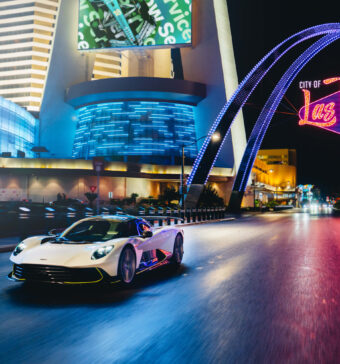
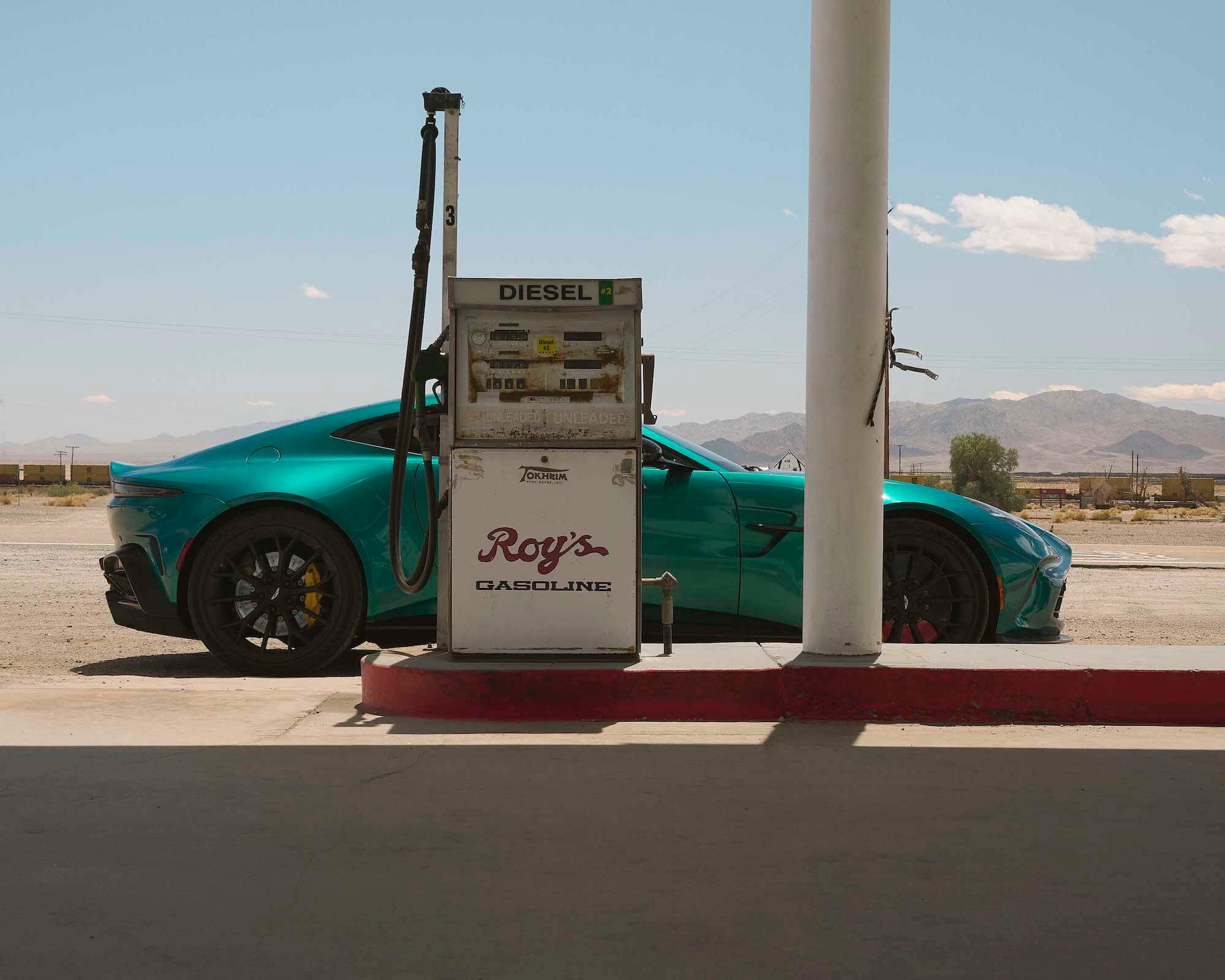
Well, not on Thomas’ watch. To celebrate Route 66’s milestone anniversary, the Centennial Commission is organising a calendar of events deemed “fitting and proper” to honour the legendary highway and the millions of people who live, work and travel along it. This includes concerts, festivals, parades, exhibitions, rodeos, caravan cavalcades and lots of car shows, naturally. A Racing Green Aston Martin Vantage has even been spotted in the area.
You don’t need to look far to find someone important heaping praise on Route 66, but few have done so as succinctly as Scottish comedian Billy Connolly, who dedicated a four-part television series to the legendary highway. “It’s a tale in tarmac of presidents and paupers,” he said in 2011, “cowboys and Indians, diners and drive-thrus, framed by the landscapes from 100 movies, with a soundtrack of the greatest music in the world, rock ‘n’ roll. Sounds good, doesn’t it?”