In the autumn of 1993, the sports world stood still. Michael Jordan, the undisputed king of basketball, fresh off his third consecutive NBA championship with the Chicago Bulls, announced that he was stepping away from the game he’d come to define. A headline from The Los Angeles Times read, “Without ‘Anything Else to Prove’, Jordan Retires” – but there was more to the picture. Overpowered by the weight of his fame, burned out by his own brilliance on the basketball court and emotionally drained by the murder of his father, Jordan signed a minor league contract with the Chicago White Sox, as both a new challenge and a welcome distraction. “I want to go and play baseball,” he said at the time. “It’s something that I’ve always wanted to do, and my father had always wanted me to do. So I’m just living his dream right now.”

Jordan’s story is unique in as much as he was at the peak of his powers when he decided to move sports, but many elite athletes have done a much better job of changing lanes. Herm Schneider, the White Sox’s head athletic trainer, said, “When it came to baseball, he [Jordan] was a little bit like a duck out of water. He loved baseball, but he didn’t necessarily have that body awareness that you need.”

Michael Jordan #45 of the Chicago White Sox bats during a spring training game against the Chicago Cubs on April 7 1994 at Wrigley Field in Chicago, Illinois. Photo: Jonathan Daniel/Getty Images

What’s often most interesting is the motivation behind the switch and, surprisingly, it’s rarely a question of hubris. Even the most accomplished competitors can appreciate that failing to replicate a level of success can risk overshadowing a great body of work. Still, few who have made the move would say it was an entirely calculated decision.

Usain Bolt, the fastest man to ever walk the planet, held a long-standing suspicion that his pace alone should stand him in good stead on the football field. When he retired from the track in 2017, he set out to achieve a lifelong ambition of playing for Manchester United. “It’s a personal goal, I don’t care what people really think about it,” the Jamaican superstar told reporters. “If you have a dream or something you really want to do, you want to try to see where it could go.”

Unfortunately for Bolt, it didn’t go far. After humbling trials at Borussia Dortmund in Germany, Strømsgodset in Norway and Central Coast Mariners in Australia, the sprinter was soon forced to hang up his boots, admitting “the sports life is over.” (It was a similar story for Italian footballing legend Paolo Maldini, whose first professional tennis match lasted all of 42 minutes, prompting him to call time on his nascent career on the court.)

For others, it’s less about chasing a dream. Rather, the sport chooses them. This was certainly the case for three-time British shot put champion and discus thrower Adelé Nicoll, who, in 2020, was tapped up by British bobsledder Mica McNeill over Instagram. “I hadn’t a clue what bobsleigh was,” admits Nicoll, who is hoping to compete at the Milan Cortina Winter Olympics in February 2026 and the Summer Olympics in Los Angeles in 2028 (no athlete has done so within one four-year Olympiad for different sports in modern times). “I’m not from a family that went skiing or took part in any winter sports, so it was completely new to me. I knew that it was a bit dangerous and that it would mean a whole new lifestyle that wouldn’t necessarily go hand in hand with athletics, so it took me a little time to reflect on. I decided that I needed to stop being so cautious because the bigger the risk, the bigger the rewards.

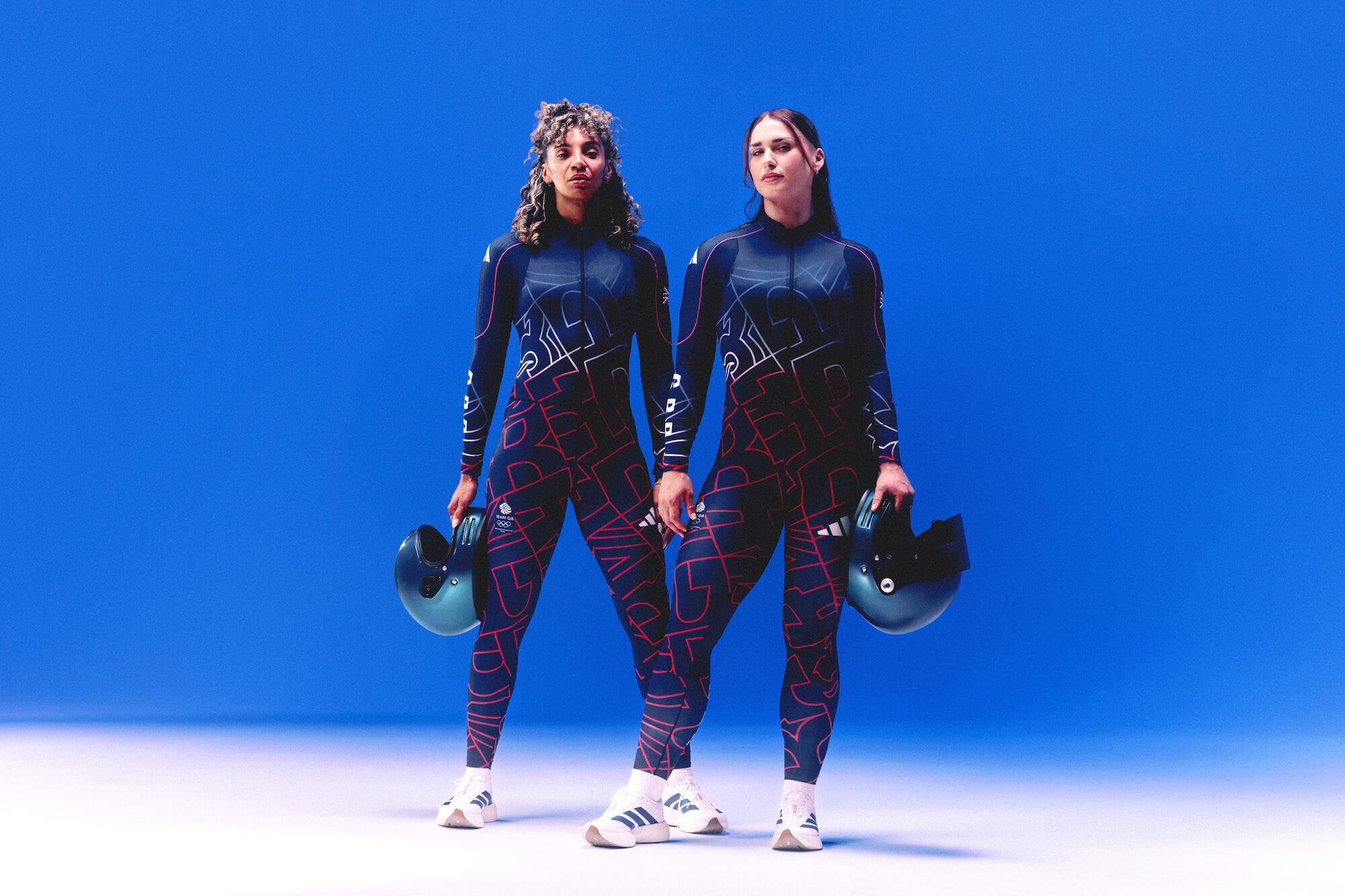
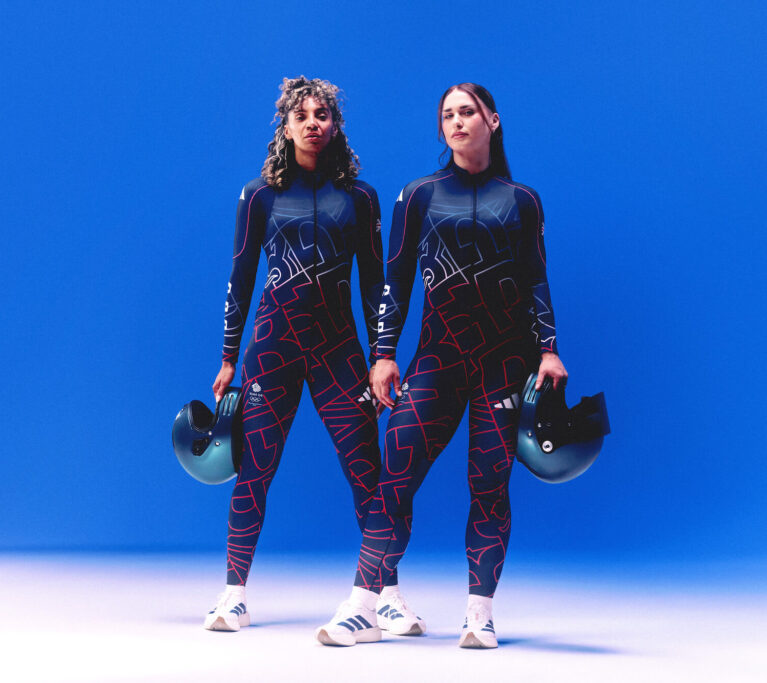
Ashleigh Nelson and Adelé Nicoll in Team GB’s adidas kit for the Milano Cortina 2026 Olympic Winter Games. Photo courtesy of adidas

It was a gamble that paid off. In 2022, Nicoll and McNeill finished second in the bobsleigh women’s World Cup event in Sigulda, Latvia, and, after moving from brakewoman to pilot, she won the European Cup in St Moritz alongside Kya Placide in January 2024. It was now her turn to do the headhunting.

Ashleigh Nelson, a British sprinter who captained Team GB at the European Championships in 2024, was watching the Summer Olympics in Paris, rueing a career-ending achilles injury, when she got the call from Nicoll. A couple of weeks later, Nelson was hurtling down the UK’s only bobsleigh track at the University of Bath, and the coaches liked what they saw. Within six months, she was competing in the sport’s World Championships, yet Nelson remains incredulous – especially when discussing the upcoming Winter Olympics. “This whole thing has happened by accident,” she grins. “It’s intense, and not in any way that I’m used to. My life is in Adelé’s hands, and vice versa. But I love the team element.

“I always said, as soon as I’m not at the top of my game, I don’t want to do sport anymore, but now I’m just incredibly grateful to have a second chance at being an elite athlete, competing at the highest level. It’s an honour to be able to do this. And of course now I’m thinking, I’ve got medals from the European Championships, the World Championships and the Commonwealth Games – I’d love to add an Olympic medal to my collection.”

Sometimes, then, an injury can be a blessing. Before switching to professional cycling, Primož Roglič was one of Slovenia’s most promising ski jumpers, winning gold in the 2007 Nordic Junior World Ski Championships. However, after a nasty crash, Roglič was never quite as fearless and soon realised he couldn’t compete at the very top of the sport. Similarly, Remco Evenepoel, Belgium’s most successful cyclist since Eddy Merckx, started his sporting life as a gifted footballer, representing RSC Anderlecht and PSV Eindhoven at junior level. Described as one of the country’s most promising talents, it was an injury that cut his playing career short, leading him to focus on cycling. “My style of play was a bit similar to how I ride a bike,” he reflected in 2020. “I had a big engine and tried to cover every blade of grass.”

Belgian Remco Evenepoel of Soudal Quick-Step, Danish Mattias Skjelmose Jensen of Lidl-Trek and Slovenian Primoz. Photo: Belga News Agency/Alamy Live News

By now, we know that a strong cycling base will prepare you for most endurance sports, but it wasn’t until the introduction of cyclors in the America’s Cup that we realised quite how much power an elite-level cyclist could actually generate. Cyclors provide the hydraulic power required to trim the sails by pedalling static bikes fixed inside the boat’s carbon-fibre hull. It’s far more effective than using your arms, it turns out. Indeed, some of the top cyclors can produce 500 watts for an hour, among them, American track cyclist Ashton Lambie. In 2012, Lambie became the first person to go under four minutes in the 4,000-metre individual pursuit, instantly making him a target for the NYYC American Magic Team.

“That was everything I could do in the individual pursuit,” Lambie told Global Cycling Network. “I’ve done that, I don’t need to keep doing it. I tried out with the American Magic team in Pensacola. I didn’t make the cut the first time, but did make it the second time. I wasn’t heavy enough, so I’ve had to gain a lot of weight. I’m now putting down PBs [personal bests] and in a recumbent position, which is insane.”

America’s Cup teams have been known to spend $300 million on mounting a challenge, so for Lambie and the dozens of other cyclists, rowers and triathletes who’ve been converted, there will likely have been added incentive. That is not to discredit them; everyone’s carrot is different. Switching sports for financial gain gladly remains an anomaly.

David Falk, Michael Jordan’s agent, could see the appeal in daring to be great – in testing the very limits of one’s athletic capabilities. “Michael gave up everything he had earned as the king of basketball to play Minor League baseball and subject himself to criticism,” Falk once said. “He put everything on the line to compete, with nothing to gain. And that is the essence of sports.