It might be the most frequently used consonant in the English language – but when an Aston Martin vehicle bears the letter ‘S’ on its badge, you know there’s nothing commonplace about it.
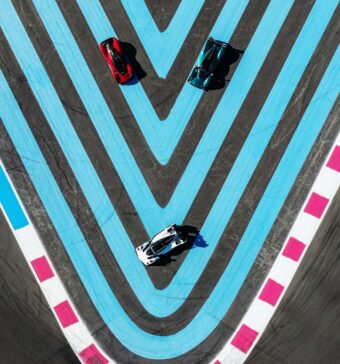
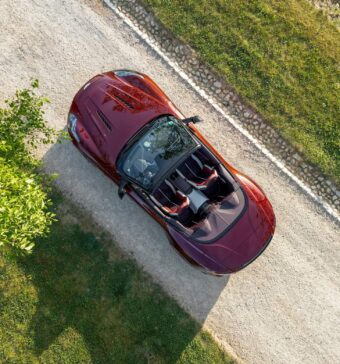
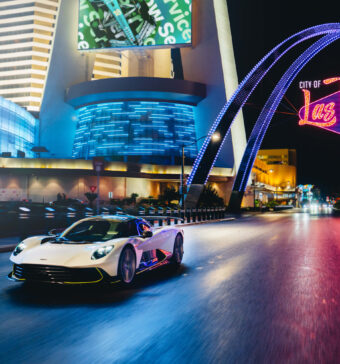
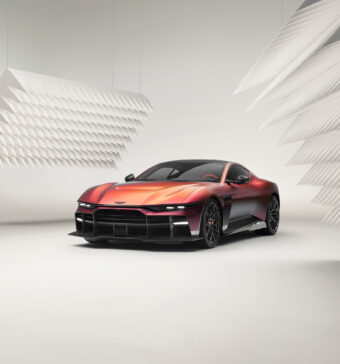
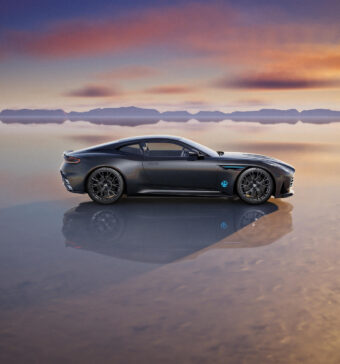
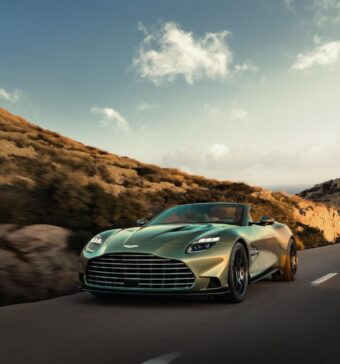
And 2025 is no exception, with the DBX S arriving in spring, the Vantage S following in July and the DB12 S unveiled in October – together forming a new Holy Trinity of Aston Martin high performance.
Aston Martin’s proclivity for adding an extra dash of sporty swagger to existing models actually goes back decades. The DB4 GT Zagato introduced in 1960, for example, was modified to produce 314bhp compared to the standard model’s 302bhp, whilst the V8 Vantage introduced in 1977 packed 40 more horses under the bonnet than the V8 that had launched five years previously.

But the narrative, when it comes to the marque’s use of ‘S’ to distinguish higher-performance versions of the models in its storied repertoire, really begins in earnest in 2004. That year, an upgraded version of the Vanquish, the grand tourer unveiled three years previously, wowed the crowds at the Paris Motor Show.
Enhanced with improved cylinder heads, intake manifolds, inlet ports and combustion chambers, the new iteration’s 5.9-litre V12 engine offered 520bhp, and propelled it to beyond 200mph with pedalto-metal, making the Vanquish S the fastest Aston Martin production car built to date. Spring and damper settings were made sturdier to accommodate this zippier performance, whilst handling, cornering and driving engagement were bolstered by recalibrated steering and a raised tail that reduced rear-end lift.
Most informed observers at Paris’s Expo Porte de Versailles agreed that it overshadowed the modified version thrashed around the ice surface of Lake Jökulsárlón in Iceland by a certain fictional spy two years previously in Die Another Day. The ‘S’ badge – and with it, connotations of enhanced horsepower, handling and agility – was born.

The Vanquish S – a limited edition, special trim ‘Ultimate Edition’ version of which was the last car to roll off the former Newport Pagnell production line in 2007 – was a quantum leap forward for the marque. But evolution is a journey with no final destination, and the ‘S’ badge’s story had only just begun. The V8 Vantage S released in 2011 saw, as well as tweaks to the chassis, braking and aerodynamics, the standard model’s 4.7-litre engine modified to produce 430bhp peak power and 490Nm of torque (10bhp and 20Nm more, respectively, than the standard model). But the real game-changer was Sportshift II: a semiautomatic transmission system with seven short ratio gears that seriously intensified driver involvement.
With the V12 Vantage S launched in 2013, meanwhile, the 6.0-litre V12 powertrain beneath the bonnet, optimised by state-of-the-art Bosch engine management, hiked the output from 510 horses up to 565 and the top speed from 190mph up to 205mph, with the requisite engine-cooling amendments such performance necessitated – the re-engineering of the carbon fibre front grille, mesh aperture and air ducts – also bolstering the sporty aesthetics.

The three new ‘S’ models joining Aston Martin’s line-up this year, meanwhile, take the S suffix into even sportier territory. The DBX S packs a 4.0-litre Twin-Turbo V8 powertrain, which, with a helping hand from turbo technology also utilised in the Valhalla supercar, sees power boosted to 717hp, as compared to the 697hp in the DBX707 version. It’s now the most powerful SUV on the market. An option of shedding 47 kilos of weight with a carbon fibre roof and magnesium wheels makes the car an even zippier proposition. Top Gear described the DBX S, which has trimmed 0.3 seconds from the 0–124mph time, as “fast and extrovert when you want it to be, refined and amiable company when you don’t”.
Gearbox and suspension modifications – plus a new exhaust system that intensifies the baritone roar accompanying this G-force-inducing velocity – all make the S version even more seductive to thrill-seeking motorists.
The Vantage S that followed also exceeds expectations in terms of agility, driver engagement and composure thanks to a host of modifications to suspension hardware, powertrain mounts and control software, plus advanced chassis engineering. Performance-wise, modifications to the 4.0-litre TwinTurbo V8 engine gee up the horses from 656hp up to 671hp, and shaves 0.1 seconds off its sibling’s 0-60mph time, which is now 3.3 seconds.

Perhaps the biggest talking point amongst brand superfans, though, are upgrades to the Vantage’s track-friendly visual cues: a new front splitter, bonnet vents and a full-width rear spoiler all add to the poised-to-pounce assertiveness which manifests the eternal bond between aerodynamics and aesthetics. Inside, carbon fibre trim and embroidered ‘S’ logos demonstrated that the creatives behind interiors at Gaydon are also chipping into the ‘S’ concept’s future.
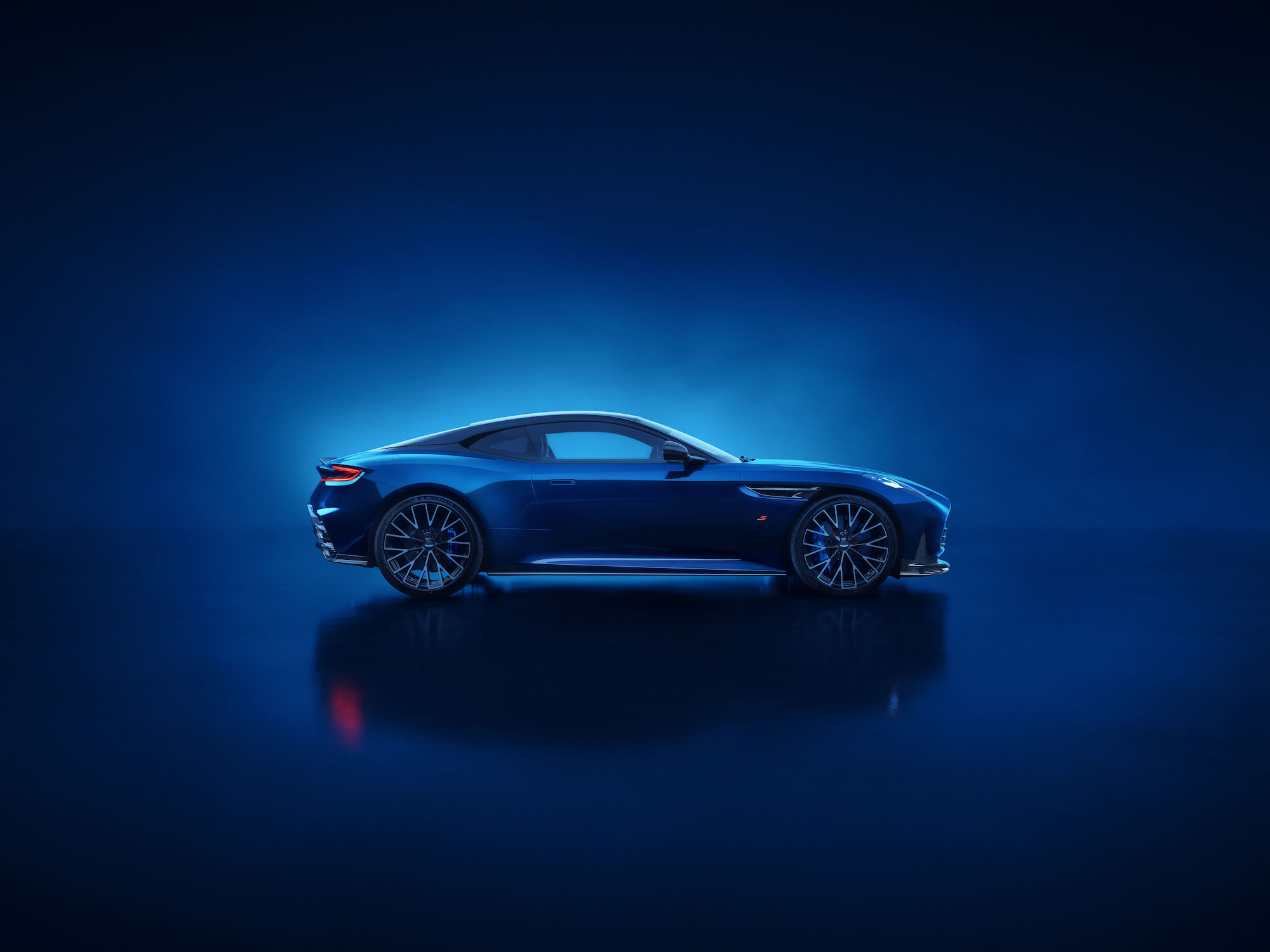
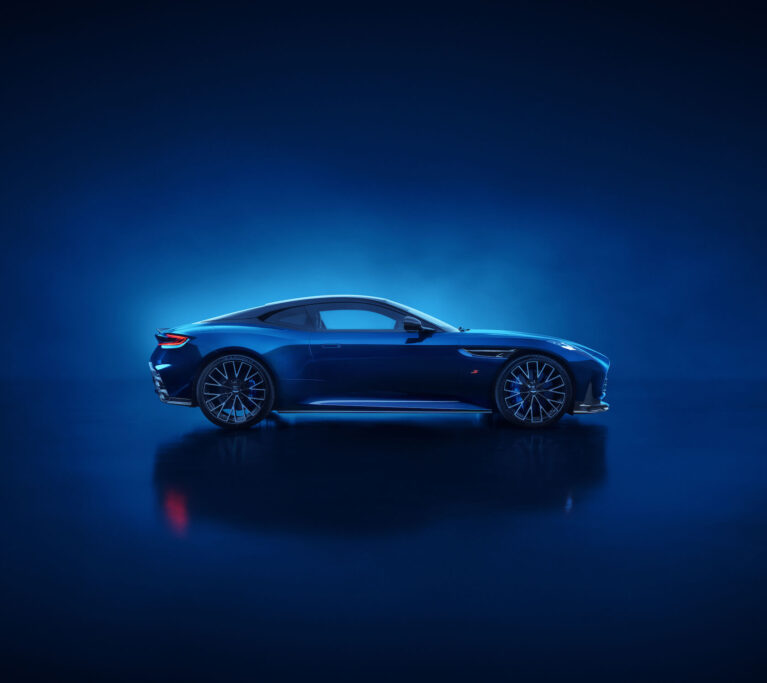
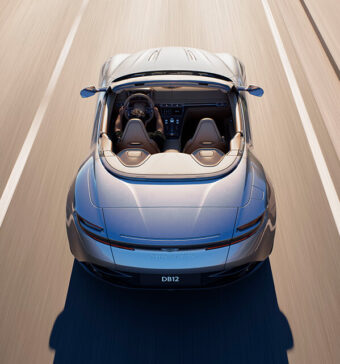
Making up 2025’s S badge Holy Trinity is the DB12 S: the sportiest iteration to date of the legendary DB bloodline, unveiled in October. An upgraded version of the 4.0-litre Twin-Turbo V8 raises the horsepower by 20ps to 700ps, cutting the 0–60mph time to just 3.4 seconds from 3.6; in keeping with this even more blistering performance, a new quad tailpipe stainless steel sports exhaust system has been recalibrated to make the sound even more visceral, with depth and potency.
Elsewhere, chassis enhancements and reduced gearshift speeds enhance agility and driver engagement, carbon ceramic brakes improve stopping response and reduce weight and, inside, design upgrades include monotone, duotone and tritone designs in full semi-aniline leather or unique ‘S’ leather and Alcantara.

“DB12 S makes an emphatic statement,” says Aston Martin CEO Adrian Hallmark. “One expressed in looks and deeds via a comprehensive suite of chassis, powertrain and design changes that take this formidable genre-defining Super Tourer to a higher level of performance, driver engagement and unmistakable style.”
Together, the three 2025 vehicles cement the letter ‘S’ as a hallmark of supercar transcendence. “My eyes light up whenever I see a new S model, because I know it’s going to be a great car, and one making the history of tomorrow,” as Steve Waddingham, Aston Martin’s in-house Historian, puts it.
And he’s not alone. The ‘S’ suffix’s future narrative will no doubt twist and turn like the letter itself, and we can all rest assured that it will be a thrilling ride.