






















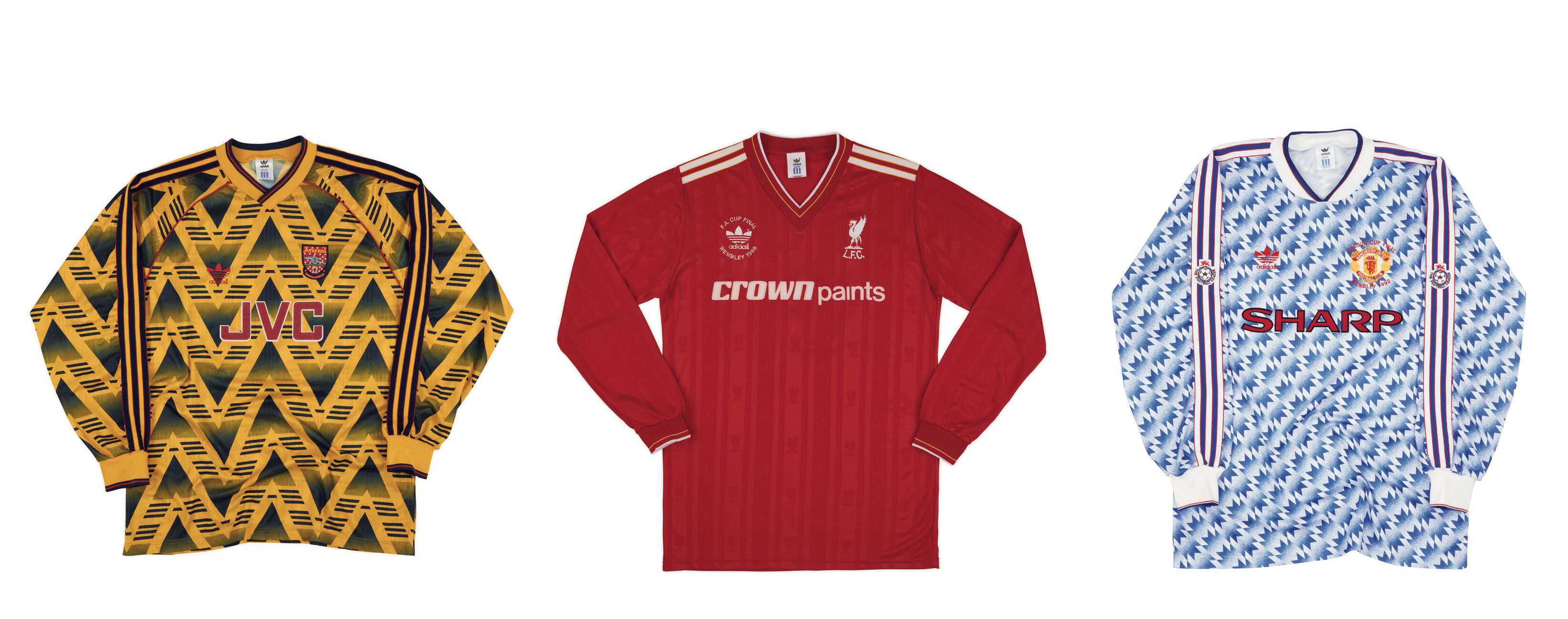

The most iconic football shirts tend to be those worn during the sport’s most memorable moments. Depending on your allegiances, a few will likely come to mind. Manchester United’s 1992-94 lace-neck home shirt worn by Eric Cantona et al. to secure the club’s first league title in 23 years (and win the double the following year), for example. The red pin-striped kit worn by Sir Alex Ferguson’s Aberdeen to beat Real Madrid in the 1983 European Cup Winners’ Cup final in Gothenburg. Arsenal’s slightly darker-than-usual “redcurrant” home shirt worn by Thierry Henry (with trademark long sleeves) to score a hat-trick – and famously kiss the turf – during the last game at Highbury in 2006. Or, a personal favourite of this writer: Newcastle United’s grandfather collar 1995-97 home shirt, in which Belgian centre-half Phillipe Albert so deftly chipped Peter Schmeichel.
It’s a subject that brothers Doug and Gary Brierton, and their business partner, Matthew Dale, have spent years speculating. This year marks the 20th anniversary of Classic Football Shirts (CFS), an online emporium that Doug and Matthew founded while still at university in Manchester. It has since grown to become the world’s largest purveyor of vintage, rare and classic football shirts, now with bricks-and-mortar stores in London, Manchester, New York, Los Angeles and Miami. Yet, despite an inventory estimated to contain over half a million football shirts (accumulated, they say, from almost every kind of stakeholder in the sport), the quest for the “holy grail” continues. What exactly that shirt looks like depends on who you ask, on what day, and quite how the results went over the weekend. The goal posts, as they say, are always moving.
“It’s a relentless cycle,” says Gary Brierton at the CFS store near Spitalfields in London. “Every year, the back catalogue of shirts and memories expands. We have bought and sold some truly amazing shirts, so you learn to appreciate which shirts might never come along again. Yes, this is a business, but none of us have forgotten why we got into it in the first place: to own the best shirts we can find.”
To celebrate the past 20 years, the trio has produced a beautiful new book, Classic Football Shirts (Ebury Press), partly to showcase some of their most significant finds, partly to reflect on the booming sub-sector they appear to have cornered, and, interestingly, the sense of identity these throwbacks afford fans and collectors alike. “They serve, in effect, as watermarks of authenticity; they are a way of signalling to ourselves and to others how many years we have served,” writes football journalist Rory Smith in one of the book’s essays. “They showcase a depth of understanding, indicate a sincerity of affection: they are a way of communicating, instantly, that the fandom we espouse is not fleeting or superficial.”
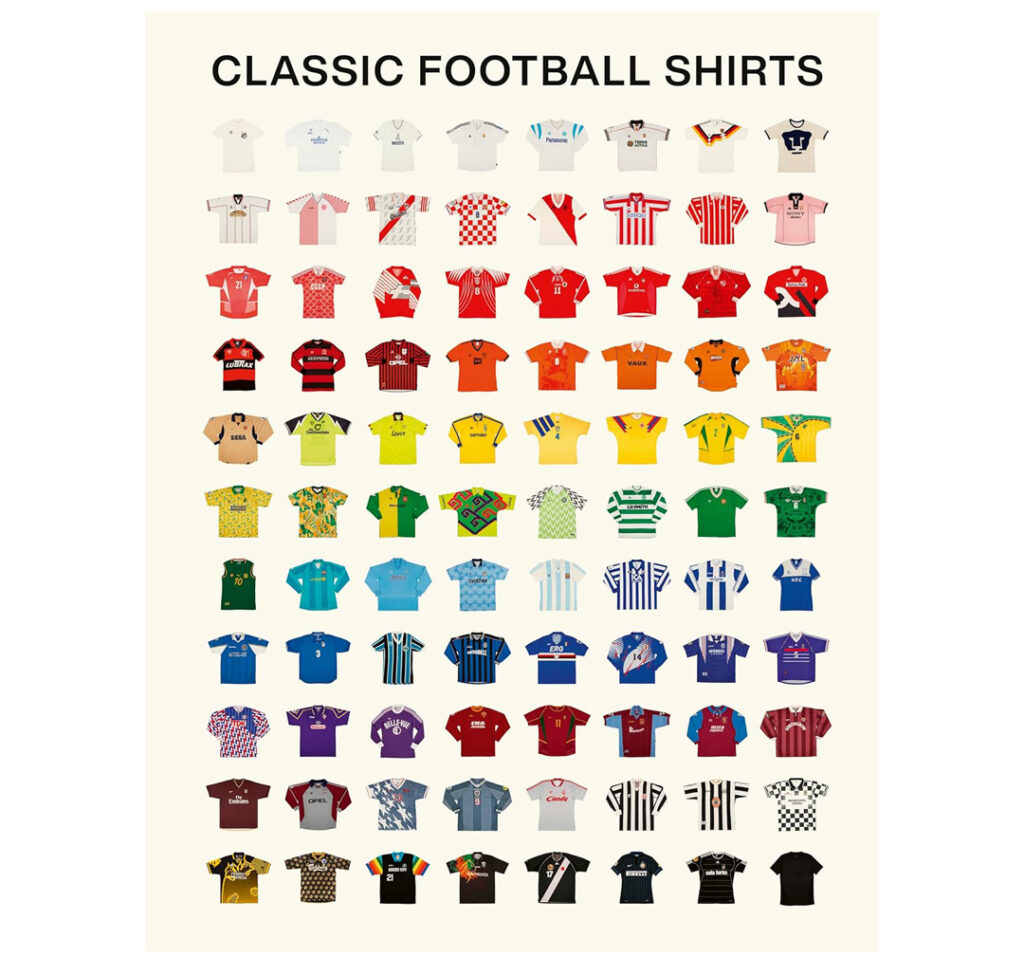
It is that depth of understanding that has made CFS the success it is today. Speaking with Brierton about the best shirts to come out of Britain is to witness a savant in flow state. Give him the team and the year, and there’s a good chance he’ll tell you how many points they won that season, the kit sponsor, the second team’s goalkeeper coach, and who refereed their F.A. Cup quarter final that year.
It’s with the same attention to detail that he and the team have curated The Vault, a temperature-controlled warehouse on the outskirts of Manchester, home to 8,000 of their most coveted “match-worn” shirts. Brierton likens it to a museum, but given the reverence with which he describes its contents, a shrine might be more accurate. Alongside collector’s items such as the shirt Fabrizio Ravinelli wore to score the winner for Juventus in the 1995-96 Champions League final against Ajax, are countless highlights from English, Welsh and Scottish teams: Sir Tom Finney’s England shirt from 1951, marking the first time the national team wore red; the shirt Danny McGrain wore as Celtic won the 100th edition of the Scottish Cup in 1985, and England’s iconic 1990 third shirt, made famous in the music video for New Order’s ‘World in Motion’ but only ever worn once in a competitive game, away to Turkey (CFS has the player-issued shirt that Gary Lineker would have worn at Euro ‘92).

“In many ways, modern popular culture was created off the back of that tournament,” says Brierton, referring to the way that sport, fashion and music intersected for the first time during that tournament. “To own a piece of that history is pretty special.”
Given that the Premier League is arguably the apex of world football, there’s a natural appetite for its shirts – old and new – among collectors around the world. Indeed, some of the more ardent enthusiasts will plumb the depths of the English Football League for more esoteric jerseys. “Accrington Stanley seems to have something of a cult international following,” grins Brierton. “And you have to remember that there are 92 professional teams in England [by comparison, there are only two professional leagues in both France and Spain], so we have to be a little bit more creative with our shirts. Hark back to Hull City’s tiger-striped kit from 1992 – it’s gone down in footballing folklore.”
I have to ask, as far as British shirts go, what comes top? “It’s always the England shirts,” says Brierton, matter-of-factly. “I think they transcend everything. They take you back to that place. Michael Owen at 18 years of age, drowning in that oversized shirt, scoring that wonder goal against Argentina in the quarter-final of the World Cup ‘98. It doesn’t get any more iconic than that.”
Classic Football Shirts (Ebury Press, £30) Essay Content by Rory Smith, Design by Daniel Streat, Visual Fields