




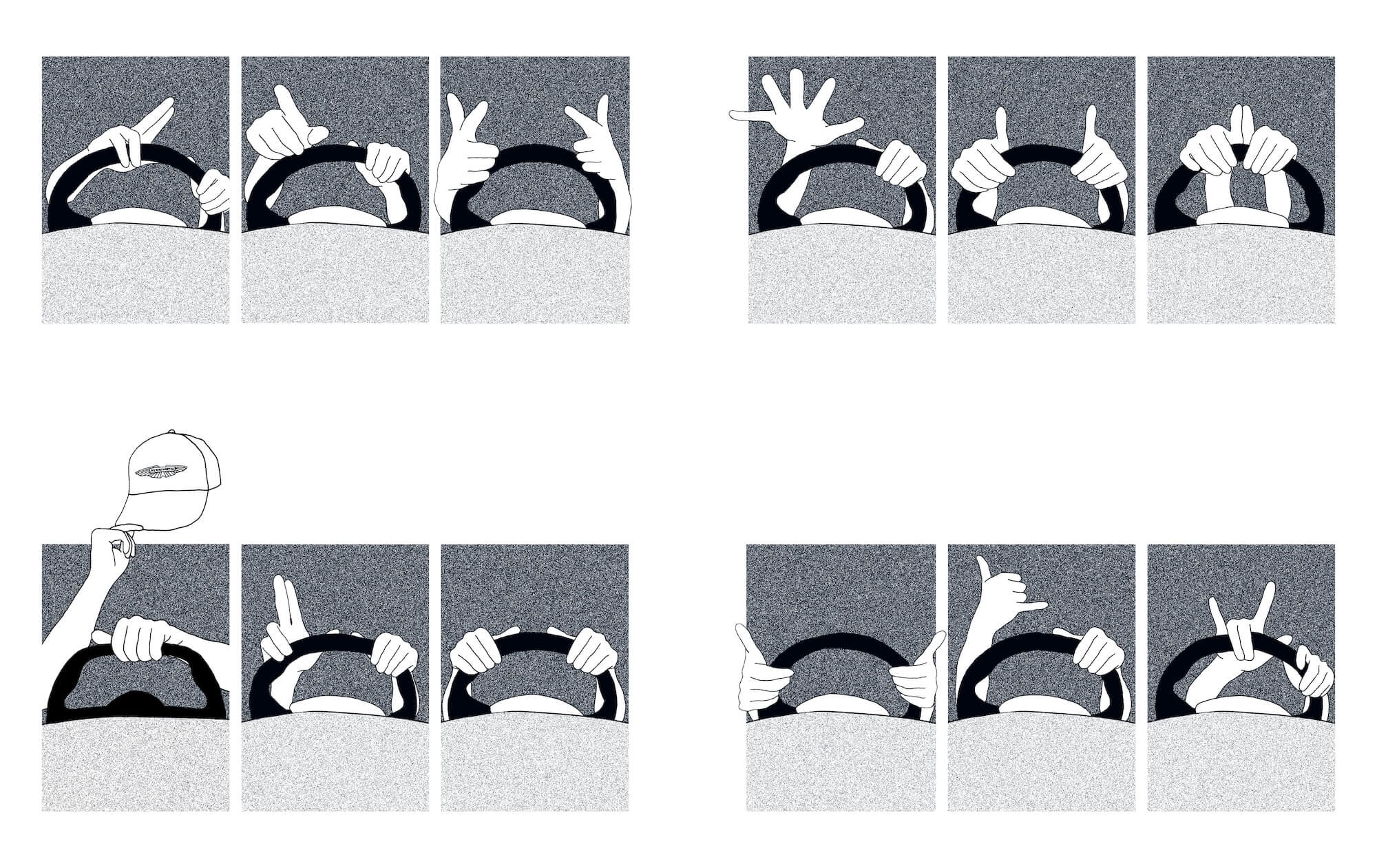
Dan Lee considers himself a generous driver. If there’s ever any doubt about who has the right of way, rest assured, he’ll be the first to yield. Partly out of the goodness of his heart, partly because he’s become slightly obsessed with the weird and wonderful ways that people offer their gratitude in return.
Lee, an artist and landscape designer based between South London and the Cotswolds, started noticing the sheer variety of gestures around two years ago, and, having compiled enough, decided to turn them into a book. The self-published guide, entitled Ta: Waves of Thanks From Behind the Wheel, shares 40 of Lee’s favourites, named, illustrated and humorously captioned. The book invites readers to keep an eye out for these silent acts of thanks – the ‘pinky lift’, the ‘shaka’, the ‘pew pew’, the ‘wings’ – and mark them off as they see them.
“I’d been spending a lot of time on the road, driving to and from Brighton [on the South Coast of England],” recalls Lee. “Before I decided to write the book, a friend and I would score these gestures – the more inflated or enthusiastic, the better. At this point, I was possibly being an overly generous driver, and so we were seeing a lot of really animated hand signs.” He remembers three guys in the cab of a white van, each giving a hearty thumbs up, scoring particularly well.
Eventually, Lee decided that this highly expressive, very British, non-verbal language was worth documenting. “Here in the UK it’s common behaviour to raise your hand or fingers as a way to thank people on the road,” he writes in the introduction to the book. “But this way of interacting isn’t universal; in some countries it’s unheard of, and locals act with bemusement when faced with a fellow driver making hand gestures over the wheel at them.”
Having begun working on the book, Lee says that friends, family and the occasional taxi driver brought a few of these gestures to his attention – but most he discovered himself. “It’s a form of collecting,” he says. “Generally, when I’d see a new one, I’d make a mental note and pull over when I could. I’d put my camera on the dashboard, take a selfie of me doing that motion, and that would become the reference image. The captions more or less wrote themselves.”
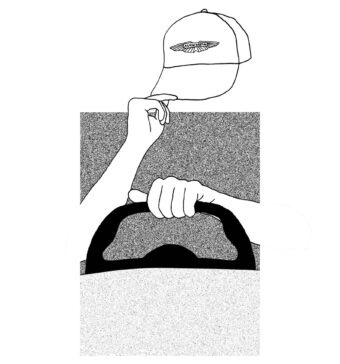
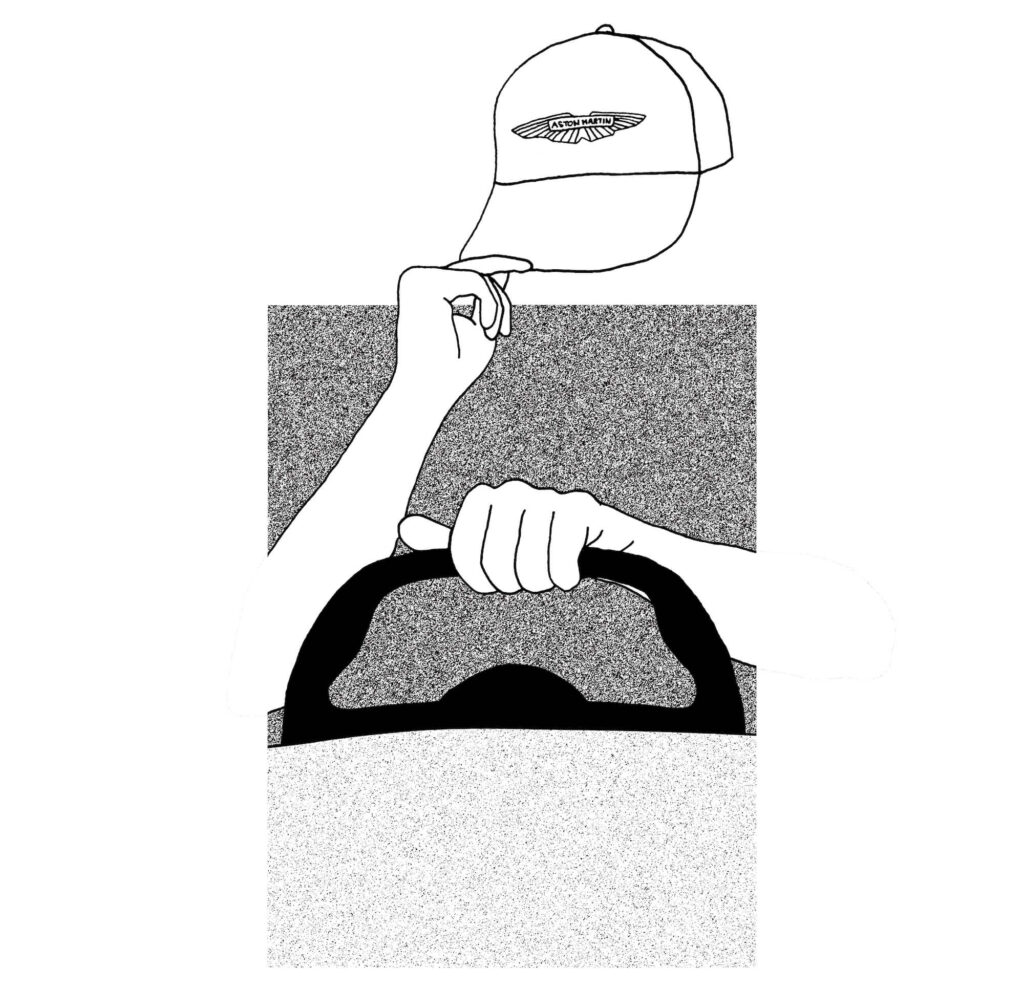
Is there perhaps a gesture that is decidedly more British than the others? Lee thinks it’s an obscure one, one that he has seen on a couple of occasions, but not before the book was published. The “Doff the Cap”, as seen above (and created especially for Aston Martin magazine) is, the artist believes, as British as it gets.
Ultimately, though, Lee wants the book to be more than just a collection of gestures. “I want it to be an invitation,” he says, “to see the road not just as a path to a destination in a solitary bubble, but as a space where small acts of kindness bounce between strangers, where thanks are exchanged without a word, and where every drive becomes an opportunity to give and receive something simple.”