








HOME
Many of Britain’s finest country hotels have always had history on their side – centuries-old architecture, storied estates, the weight of the past in every corridor. What sets the best of the best apart today are the choices that their visionary owners have made to optimise all that heritage…
THE FIFE ARMS, BRAEMAR
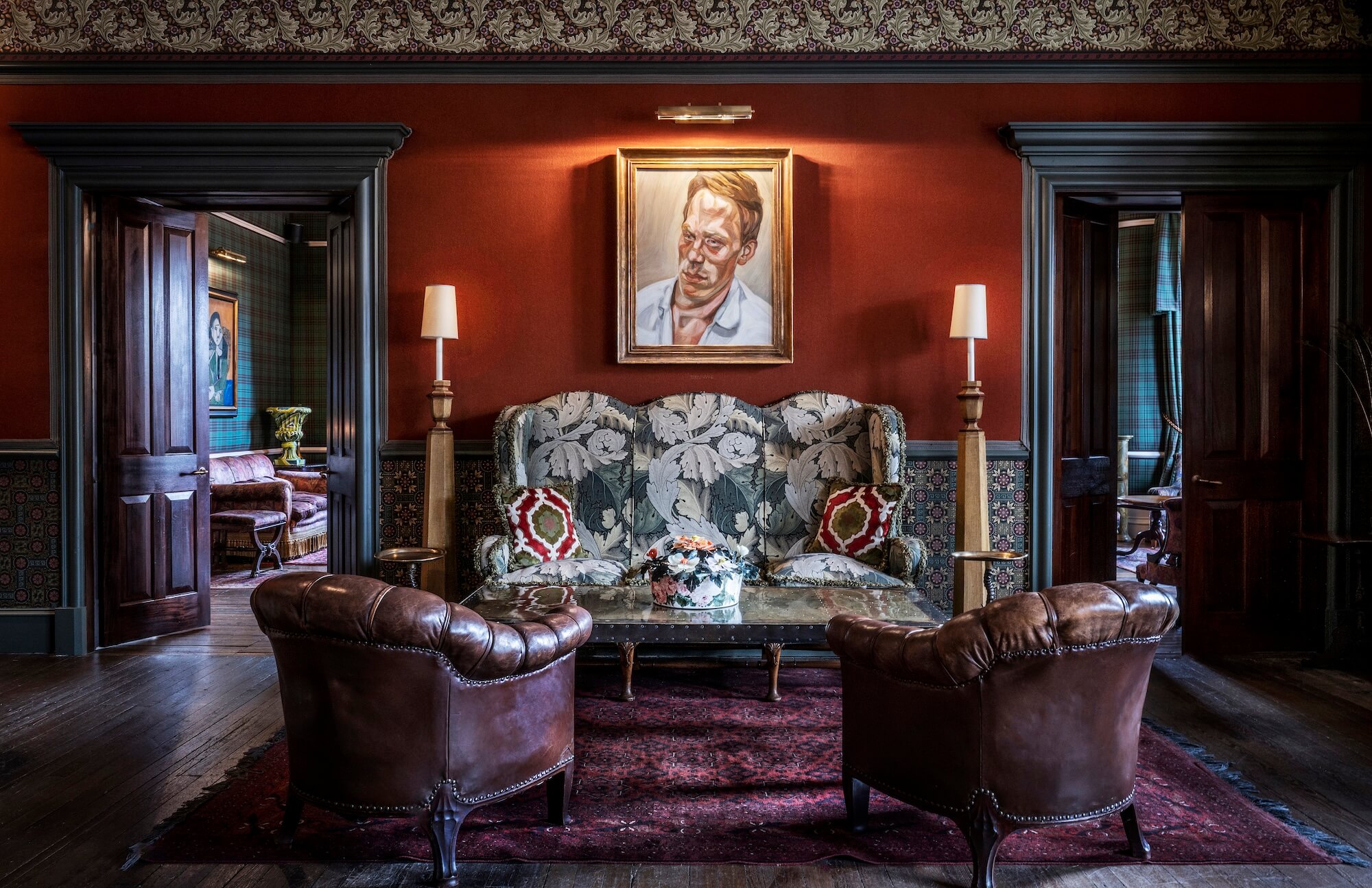
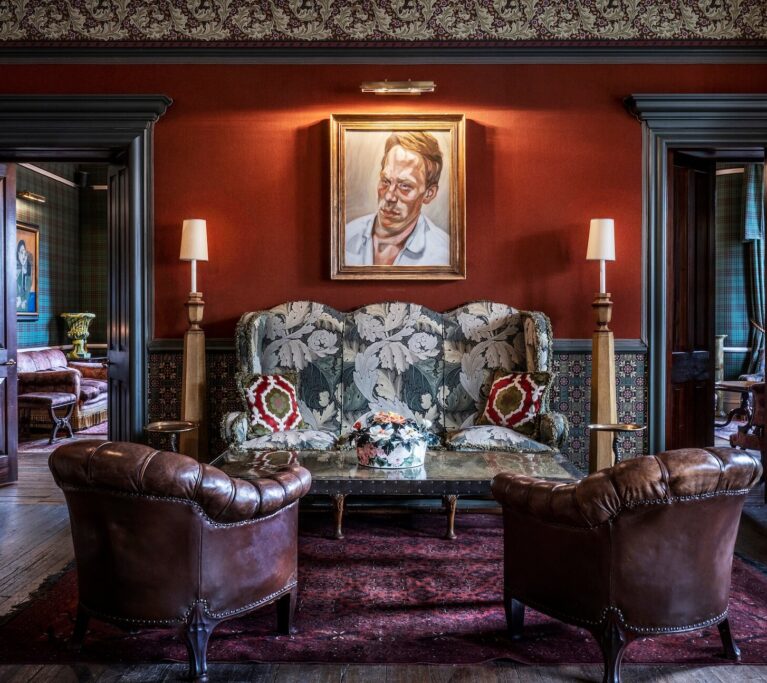
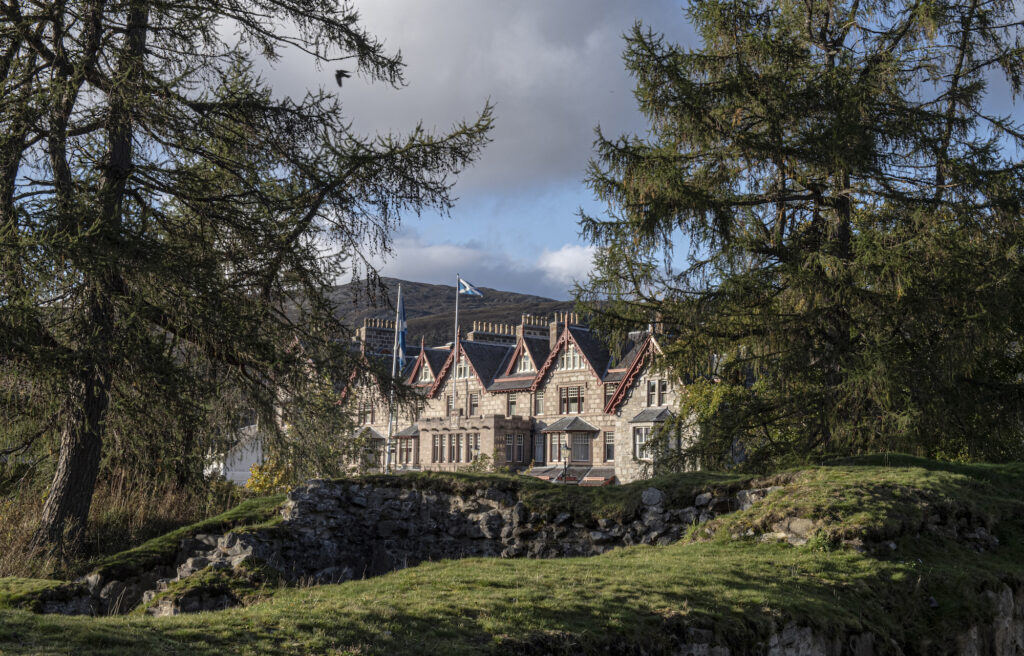
The Fife Arms has welcomed travellers since it opened in Braemar in 1856, though it entered an astonishing new era when art dealers Iwan and Manuela Wirth, founders of global powerhouse Hauser & Wirth, acquired it in 2019. They appointed Russell Sage Studio to transform the interiors, and filled it with enough art to blur the line between hotel and gallery.
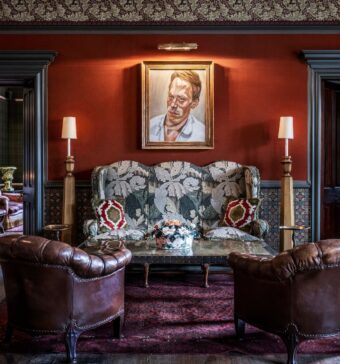
Artists from their roster were commissioned to respond to the Victorian coaching inn’s Highland surroundings. Zhang Enli’s hand-painted mural transforms the Drawing Room ceiling into something otherworldly. A Richard Jackson chandelier, composed of machine-milled bagpipe drones and glass antlers, presides over the lobby, where a Mark Bradford-decorated self-playing Steinway tinkles into life each evening. Pure magic. So too is the experience of coming across artworks you’d usually find behind a velvet rope: paintings, drawings and photographs by Lucian Freud, Pablo Picasso, Louise Bourgeois, Pieter Brueghel the Younger, Man Ray and Cecil Beaton – and, in a charming discovery, Queen Victoria, who regularly stopped here to change her horses en route to nearby Balmoral. Her watercolour of a stag reveals she was quite the artist herself.
An antique taxidermy stag keeps watch in the Clunie Dining Room; another is suspended from the ceiling of the hotel’s pub, The Flying Stag, its walls lined with portraits of Braemar locals. The Fife Arms has always been at the heart of the village, and you don’t have to be a resident to enjoy its restaurants, a cocktail in Elsa’s Bar, or a dram in Bertie’s Whisky Bar. And when it comes to retiring to your own quarters, even more awaits. Each of the 47 individually decorated rooms and suites is brimming with artworks, antiques and curiosities creating a Highlands sanctuary only the Wirths could dream up.
THE NEWT, SOMERSET
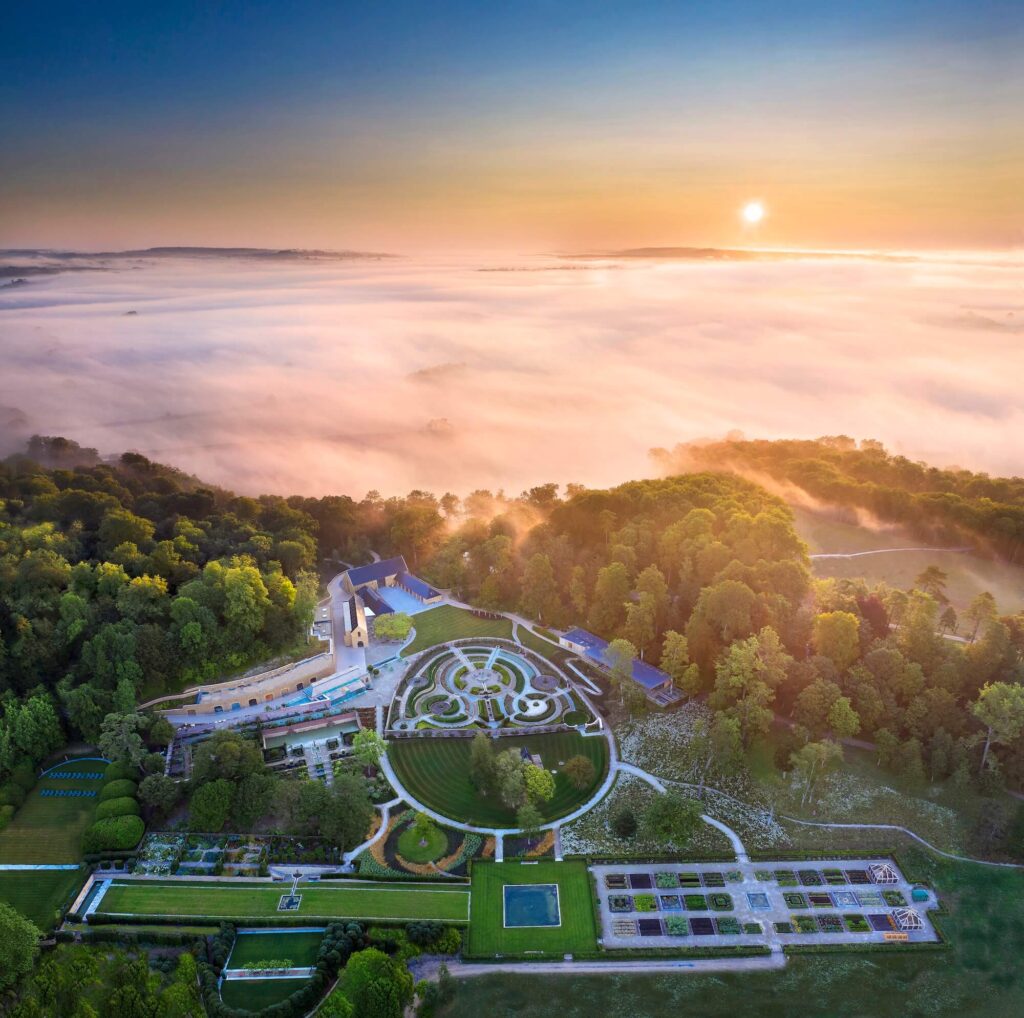
How do you make a country house hotel cool? Ask Karen Roos, former editor of Elle Decoration South Africa, and Koos Bekker, billionaire Chair of Naspers – the power couple who transformed Babylonstoren, an 18th-century Cape Dutch farm, into one of the world’s best hotels. Together, they have worked the same magic on the Hadspen House estate near Bruton, Somerset, now known as The Newt. The hotel rooms, spa facilities, restaurants and bars are spread across the handsome Georgian villa, Hadspen House, a cluster of charming 18th-century farmstead buildings known as The Farmyard, and, as of 2026, the revitalised Regency rectory, Yarlington Lodge. With interiors led by Roos herself, The Newt has been a favourite among the style set ever since it opened in 2019.
The estate’s hundreds of acres of woodland, farmland, apple orchards and gardens have seen the most monumental transformation. Over 100,000 trees and whips have been planted in the last 10 years by Roos and Bekker, who have also encouraged an experimental approach to garden design and one-off landscaping gestures, including mowing the Burberry Check into the croquet lawn during a summer takeover by the British fashion brand. The Newt is also a working farm, rearing native British White cattle, Dorset Down sheep, Water Buffalo and wild deer herds, alongside more than 350 varieties of fruits, vegetables and herbs, and has its own estate-based food production.
Non-resident visitors can explore the grounds via an annual Newt membership, including access to The Story of Gardening museum, reached via a treetop walkway – one of several new buildings discreetly embedded within the protected landscape that give the rural setting a modern edge. Another is the Garden Café, a striking glass-fronted structure overlooking the walled Parabola Garden, home to over 600 apple trees, where guests can enjoy farm-to-table produce with a glass of one of the estate’s own ‘cyders’.
BEAVERBROOK, SURREY HILLS
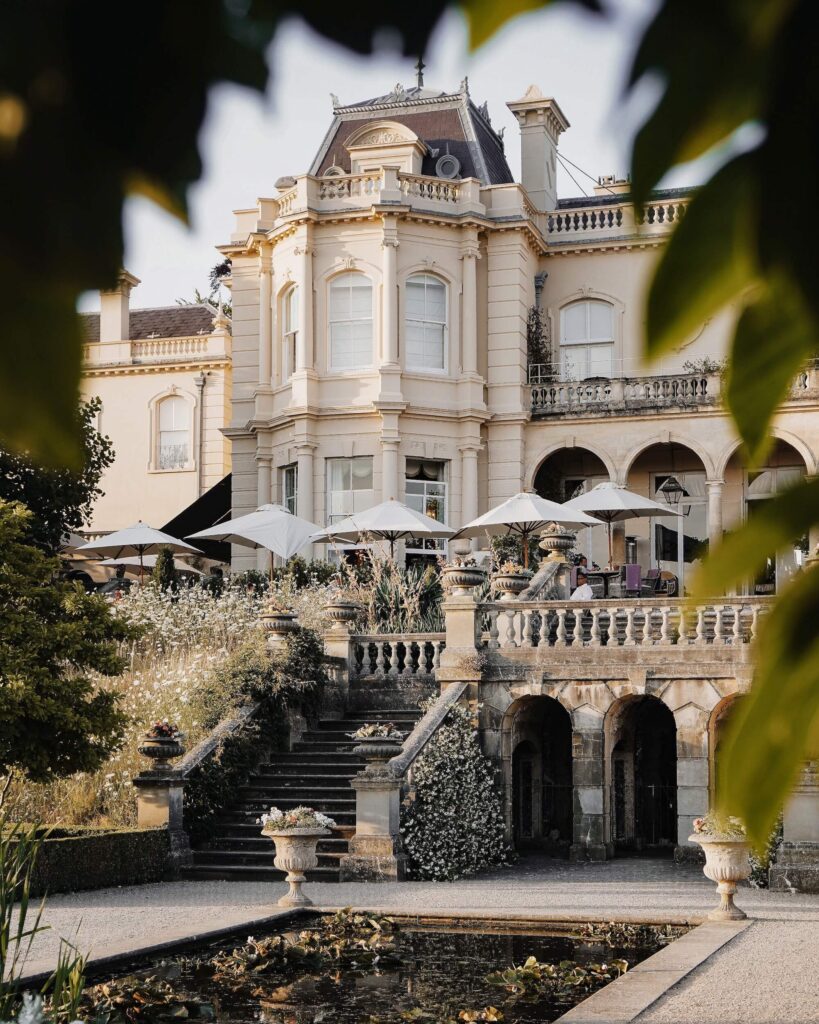
Few hotels can claim to be as storied as Beaverbrook, the former Surrey Hills residence of Max Aitken, aka Lord Beaverbrook. Stories were, after all, the source of this newspaper magnate’s influence and power in 20th-century Britain. Each of the 18 rooms in the Main House, a Grade II-listed Neoclassical mansion, is named after a luminary he hosted, from Ian Fleming and Elizabeth Taylor to Rudyard Kipling. In fact, the Jungle Book author was along for the drive when Lord Beaverbrook first laid eyes on the country pile in 1910 – and when you wind up the driveway, you can see why he bought it… and never left.
Once inside, you feel every inch the guest of honour, attended to at every turn by staff wearing Spitfire badges – a tribute to Lord Beaverbrook’s role in trebling production of the iconic fighter planes as Minister of Aircraft Production in Winston Churchill’s wartime government. History is a big part of Beaverbrook’s appeal, with memorabilia, treasures and antiques throughout, but new co-owners Joel Cadbury and Ollie Vigors have ensured the hotel is anything but stuffy. The vibrant and colourful Coach House Spa, designed by stained-glass artist Brian Clarke, is a case in point, as are the interiors by fellow British design royalty Susie Atkinson in the Main House, and Nicola Harding across the 11-room Garden House and The Village, which adds a further 21 rooms to the estate.
With so much Britishness to celebrate, Beaverbrook’s dining standout is something of a curveball: next-level sushi, sashimi and nigiri courtesy of chef Wojciech Popow at The Japanese Grill, plus a creative take on egg and soldiers for dessert, all served with sweeping views over the hotel’s quintessential English country garden and the Surrey Hills beyond.
GRANTLEY HALL NORTH YORKSHIRE
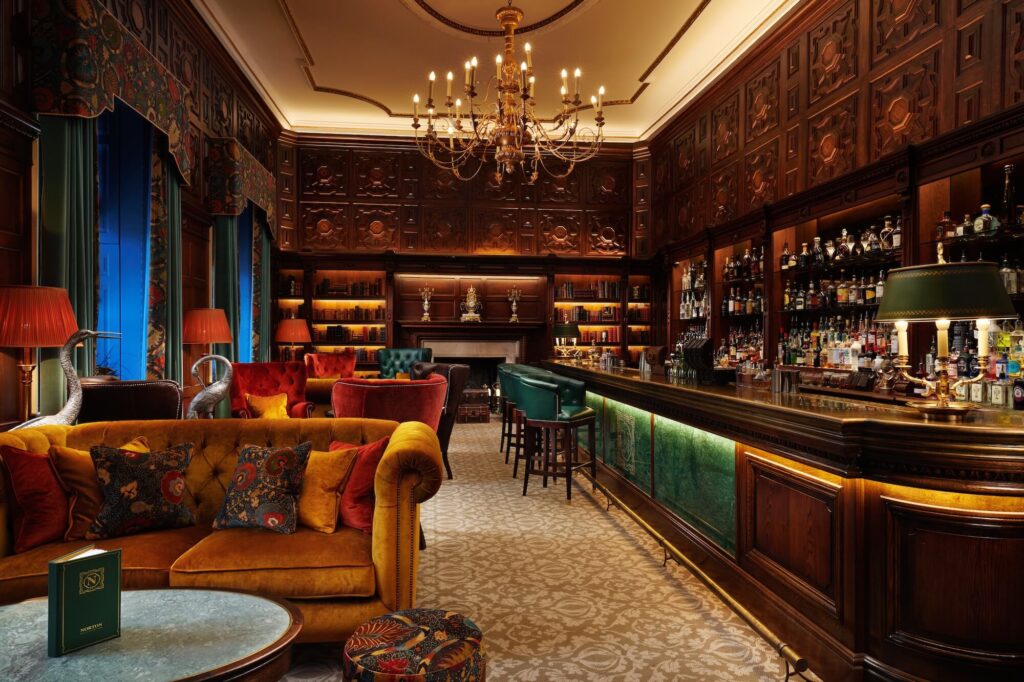
A spectacular backdrop for the Yorkshire Elegance Concours each summer, Grantley Hall is itself something of a Best in Show for its home county. Barnsley-born Valeria Sykes acquired the Palladian property and its 30 acres of grounds with a vision to place Yorkshire firmly on the luxury map, transforming the neglected landmark into one of the country’s most celebrated hotels. Local artisans were called upon to sensitively restore the architecture – the oldest parts of which date back to 1680 – while bespoke furnishings, joinery and artwork were sourced from makers across the county to give the interiors a true sense of place amid the grandeur.
Nowhere is that regional pride more apparent than in the dining. Yorkshire’s reputation as a culinary powerhouse is well-earned, and Grantley Hall’s chef patron Shaun Rankin is among its finest ambassadors. His Michelin-starred namesake restaurant is a love letter to the region, with his Taste of Home menu drawing on hyper-local produce – much of it grown in his own kitchen garden on the estate. That Yorkshire-first ethos also prevails at Fletcher’s Restaurant, where British and European dishes might showcase Whitby crab, Nidderdale lamb and the county’s famed forced rhubarb, while the pan-Asian restaurant EightyEight, housed in a sleek modern pavilion overlooking the hotel’s Japanese garden, reinterprets the same sourcing philosophy through a far-Eastern flavour palette.
Yorkshire competes just as confidently as a spa destination, and Grantley Hall’s world-class wellness facilities are the proof. Drift between Three Graces Spa’s indoor-outdoor hydrotherapy pool, bespoke snow room and Nordic Spa Garden, or submit to the rigour of the Elite Gym’s underwater treadmill, 3D body scanner and Cryotherapy Unit – handy after some inevitable overindulgence.
AWAY
The best British-operated hotels abroad are not so much about exporting a homegrown formula as drawing on a legacy of knowing how to read a place.
MAYBOURNE RIVIERA, FRANCE
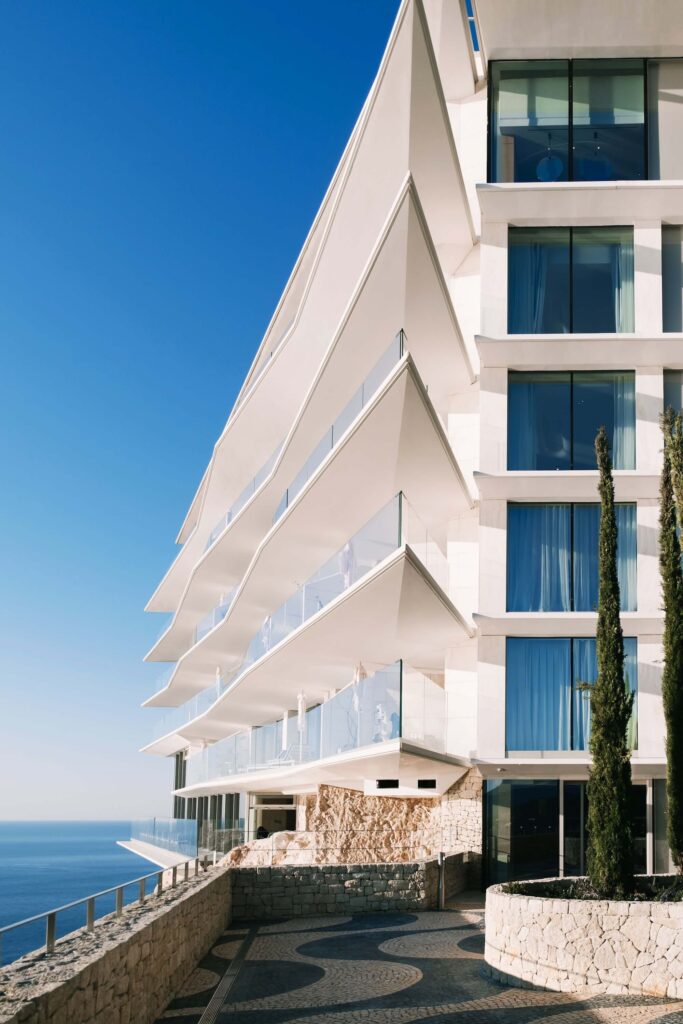
The British hotel group behind Claridge’s, The Connaught and The Berkeley has been taking its luxury approach to new corners of the globe since opening Maybourne Beverly Hills in 2020, with a Paris outpost next in the pipeline. In 2021, it made its debut in the South of France with the Maybourne Riviera, a modernist marvel unlike anything else in the brand’s portfolio (until perhaps the arrival of The Emory in 2025, its ultra-modern new London hotel). Built into the cliffs of Roquebrune-Cap-Martin and composed of horizontal planes, dramatic overhangs and walls of glass, the Maybourne Riviera looks, at first glance, like the sort of lair a Bond villain might commission.
The hotel is, in fact, a clever reinvention of the Vista Palace, largely dismantled and reimagined by French architect Jean-Michel Wilmotte on a stretch of coastline that has long attracted visionary modernists: Eileen Gray completed her iconic E-1027 villa here in 1929, and Le Corbusier his Cabanon (cabin) in 1951. Bryan O’Sullivan Studio has woven that legacy into the fabric of the hotel interiors through bespoke Gray Chairs that reinterpret the Irish designer’s tubular steel forms, alongside a Le Corbusier-inspired stained-glass installation in the cocktail lounge, Le 300.
Meanwhile, there is all the glamour you would expect from a Maybourne hotel that more than matches its location above Monaco: fine dining helmed by Mauro Colagreco (who also runs the three-Michelin-starred Mirazur in neighbouring Menton); a spa conceived by André Fu Studio, and of course, the suites that each boast uninterrupted vistas of the Mediterranean. If the Maybourne Riviera is anything to go by, the forthcoming Maybourne Saint-Germain in Paris will be well worth the wait.
WARREN STREET HOTEL, NEW YORK
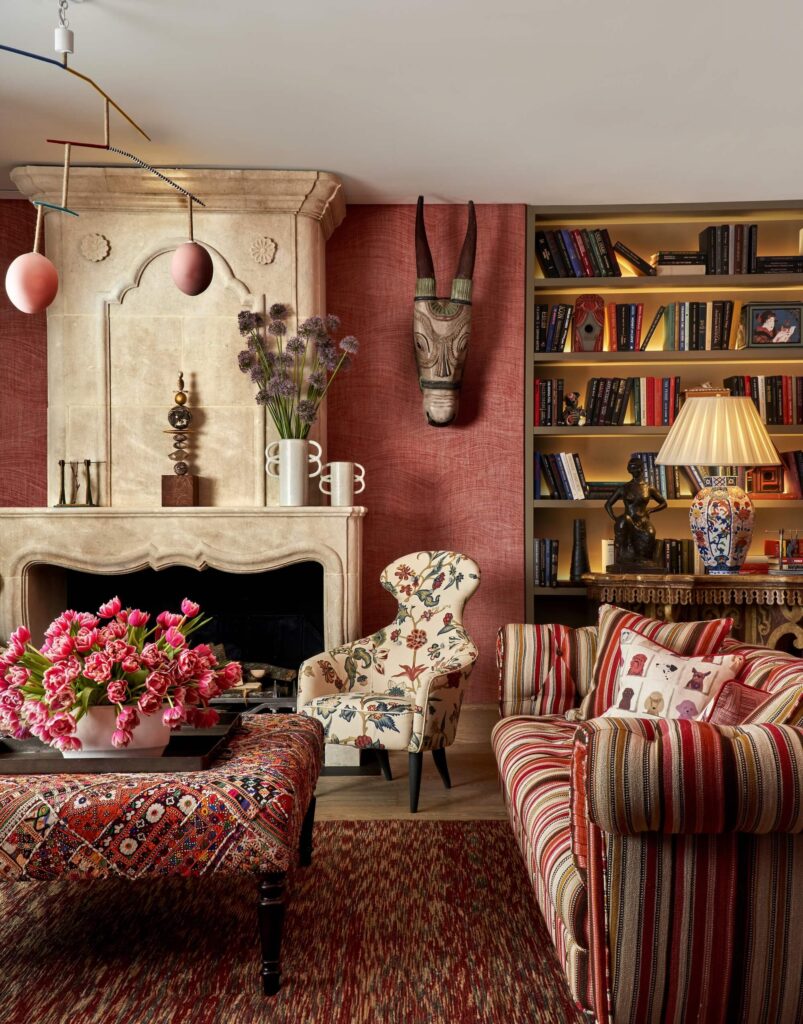
Firmdale Hotels has carved out a distinctive New York presence with The Crosby Street Hotel in SoHo and The Whitby in Midtown, located around the block from Q by Aston Martin, but it’s the newest addition, the Warren Street Hotel in Tribeca, that takes Firmdale co-founder and Creative Director Kit Kemp’s eclectic design sensibility to another level. The upscale neighbourhood is a savvy choice, and a resonant one too: this was once New York’s trading hub for textiles, a well-known soft spot of the celebrated British designer.
That love of textiles plays out across every inch of the hotel, from specially selected fabrics in collaboration with Christopher Farr Cloth and GP&J Baker, to floors carpeted in limited-edition batik patterns and oversized headboards upholstered in statement prints. Even the art embraces textiles. Highlights include a tapestry by mixed-media artist Sanaa Gateja and a cluster of rattan sculptures by Cristián Mohaded. These pieces are part of a wider collection that includes work by Sir Terry Frost and Tony Cragg, which feels right at home in what is now New York’s hottest art gallery district.
Like all Firmdale hotels, no two rooms are the same, but there is a running thread of English eccentricity, plus one or two home comforts such as the afternoon tea and the classic Sunday roast with all the trimmings – a first for the group’s New York properties, and further proof that Kemp’s particular brand of British warmth translates just as well across the pond.
GOLDENEYE, JAMAICA
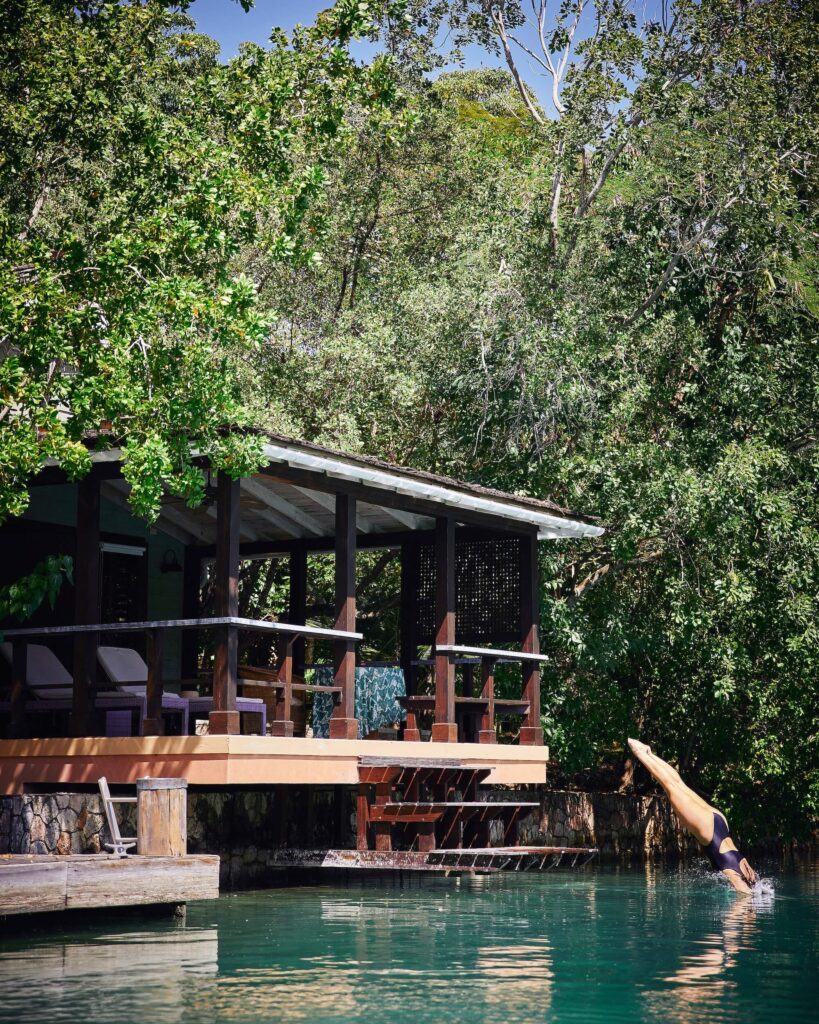
Immortalised by James Bond, GoldenEye symbolises everything that the world’s most famous spy stood for: effortless glamour, seductive charm and a devilish eye for detail. This year marks the 80th anniversary of the arrival of Bond’s creator, Ian Fleming, in Jamaica, and how he changed its fortunes. Everyone from Noel Coward and Evelyn Waugh to Truman Capote stayed at GoldenEye, and this sun-soaked villa on the northern shore became the place for elegant R&R.
Today, the celebrity count lives on, and the estate, transformed into a resort by Island Records founder Chris Blackwell, has now expanded across 52 acres of private villas, cabanas and beach cottages, catering to honeymooners and multi-generational families who have been returning for years. A turquoise, tropical lagoon laps languidly at sun terraces, while swimming pools and white sandy beaches offer enough activities to keep guests of every age entertained. Golden sunsets, fine cocktails and old photos of Fleming catching marlin with famous friends hint at the glamour of yesteryear.
In 2025, Hurricane Melissa wreaked havoc across much of Jamaica, causing US$9 billion worth of damage. GoldenEye, however, remained relatively unscathed and has been assisting in recovery efforts. With airlines reallocating flights from the Middle East and India to the Caribbean, now is an especially good time to go.
HOTEL EXCELSIOR VENICE LIDO, ITALY
Iconic Hotels & Resorts operates some of Britain’s most historic and celebrated destinations – Cliveden House, Chewton Glen and The Lygon Arms among them – so when the group first expanded internationally, it sought a property to not only preserve, but also reimagine.
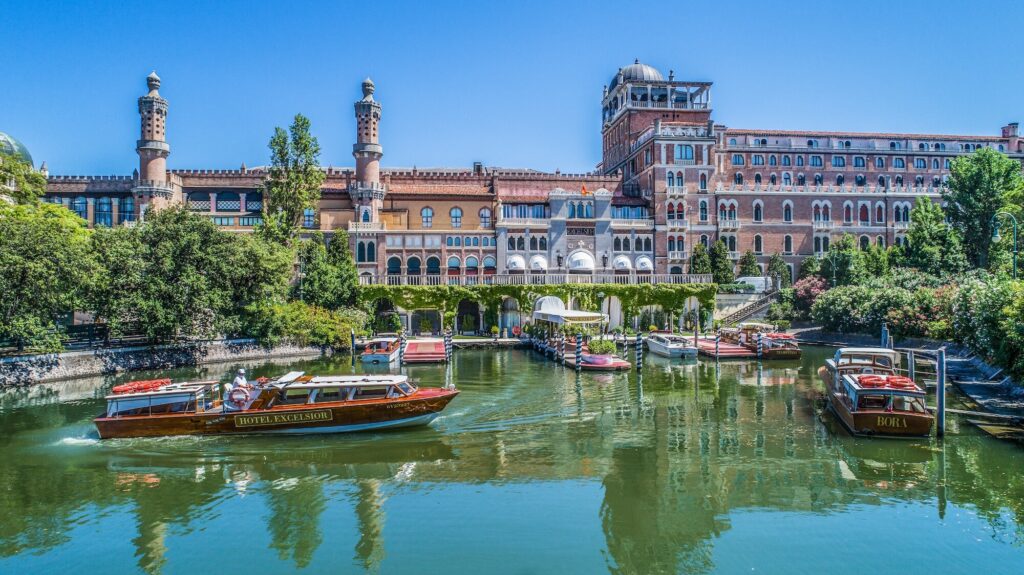
The Hotel Excelsior Venice Lido, a Belle Époque palace built in 1908 on the Adriatic Sea, oozes all the character and history to fit right into the family. It was on the hotel’s pontoon that the Venice Film Festival was officially launched one summer evening in 1932, and the Lido landmark has been the home of the festival ever since, rolling out the red carpet for the biggest names in cinema, from Greta Garbo and Orson Welles in the 20th century to George Clooney and Cate Blanchett in the 21st.
Portraits of bygone visitors welcome today’s guests on arrival through to the restored Palm Court, the social heart of the hotel. Also new for 2026 is the first wave of redesigned guest rooms that dial up the dolce vita spirit while offering a modern interpretation of Mediterranean luxury. A particular luxury of this property, the only beachfront hotel in Venice, is that many rooms have sweeping sea views. And within 15 minutes, you can be whisked across the lagoon aboard one of the hotel’s vintage speedboats to explore the main sites of Venice – though with a private beach at your disposal, you may choose to skip the sightseeing altogether.