


















As is perhaps apt for “the man who is only a silhouette”, questions pertaining to the more quotidian habits of 007 have been asked for many decades. It was back in 1982 that Kingsley Amis, writing in The Times Literary Supplement, queried: “Does he still drink champagne with scrambled eggs and sausages? Wear a lightweight, black and white, dog-tooth check suit in the country? Do twenty slow press-ups each morning? Read Country Life? Ski, play baccarat and golf for high stakes? Dive in scuba gear?”
Amis, writing under the pseudonym of Robert Markham, penned the first Bond novel following the death of Ian Fleming. Colonel Sun appeared in 1968 and has been followed by dozens of Bond novels by different authors, including Sebastian Faulks, Anthony Horowitz and William Boyd.
It was, of course, Ian Fleming who referred to Bond as a silhouette. In a piece of suitably lateral thinking that would please M, author Kim Sherwood has spent the past few years fleshing out the world of 007 through a triptych of novels centred on his fellow agents (the latest, Hurricane Room, was released in May 2026).
Across the series, Sherwood has unearthed new characters who hail from South Asian immigrant families and tough London estates. And in Johanna Harwood, aka 003, she has created a character of Algerian-French descent who takes her name from the film franchise’s first female scriptwriter. Sherwood is herself the first woman tasked with continuing the Bond legend on the page. So, how exactly did she get the opportunity from the Fleming estate?
“I was just starting as a creative writing student at the University of East Anglia, and I was so excited Bond was back in book form back then with the release of Devil May Care (2008) by Sebastian Faulks because it was my dream to write Bond,” says Sherwood. “Anthony Horowitz’s Forever and a Day was another big one for me because it was published in 2018, when my debut novel Testament was published, and I tweeted a picture of the books together in a bookshop with something like, ‘One step closer to my dream of writing Bond…’ Then in 2019 the Fleming estate contacted me, and the dream came true!”
Commissioned by the Fleming estate to expand the Double O section, Kim Sherwood faced an inevitable conundrum – what to do with Bond himself. Daringly, in her first two novels, Bond has been kidnapped, his Aston Martin is under dust sheets, and his future lies in the hands of these operatives’ derring-do.
“I felt that Bond is a star with his own gravity – if he’s there on the page or screen, all eyes go to him,” she reveals. “I decided to bake the challenge into the story itself, and at the start of Double or Nothing – the first in the trilogy – Bond has gone missing on a mission, presumed captured or even killed. We meet our new heroes as they search for him. My hope was that by moving Bond into the shadows, the spotlight could be shared by Johanna Harwood (003), Joseph Dryden (004) and Sid Bashir (009).”
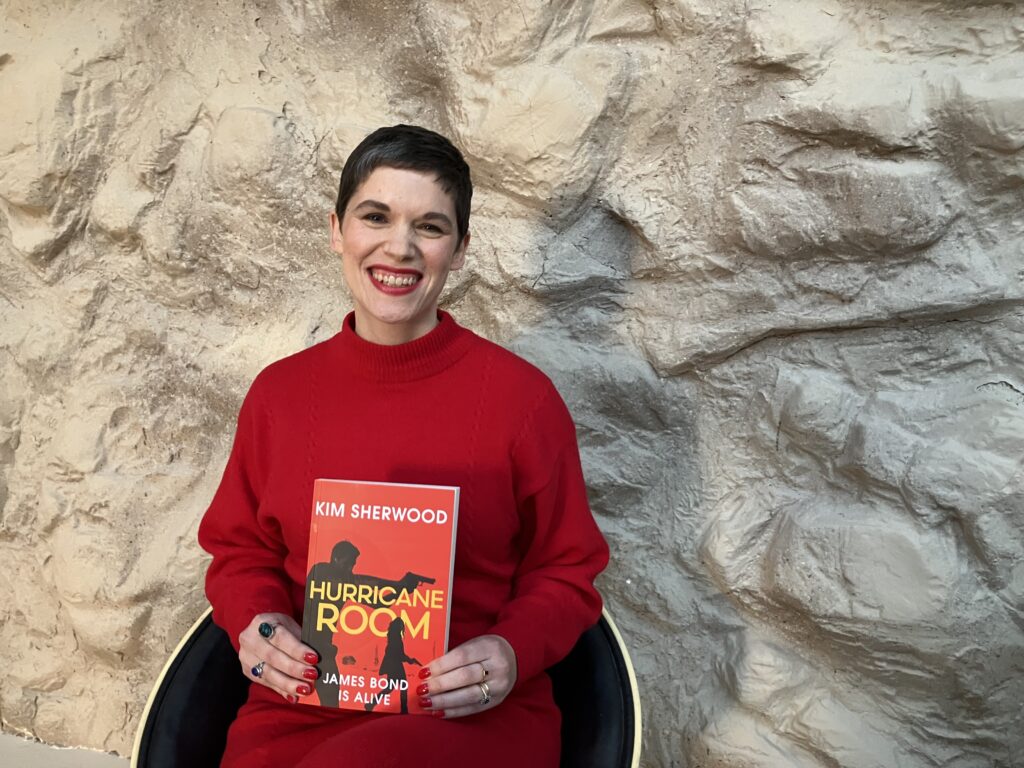
Sherwood, who read her first Bond novel (From Russia With Love) at age 12, employed narrative devices used by Fleming himself.
“Bond is present in flashbacks and memories in Double or Nothing and A Spy Like Me, which is a trick I took from Fleming,” admits Sherwood. “Fleming often has Bond AWOL from the story, whether in From Russia With Love or The Spy Who Loved Me, two of my favourites. And now in Hurricane Room, Bond is back, so it’s a chance for me to do something totally new.”
The author was also told by the Fleming estate that they wanted to bring the books up-to-date and set the novels in the present day, a request she says she struggled with at first.
“Initially, that was something of a wrench, as I am fascinated by the Cold War history of espionage. However, I soon became excited by the chance to break new ground with contemporary concerns and technologies, just as Fleming did.”
Setting Bond and his fellow agents in the contemporary world also means creating an entirely different type of villain. In Sherwood’s books, we’re confronted with the notion of climate change technology falling into the hands of bad actors, alongside the more familiar Bond tropes of misanthropic billionaires, decaying Soviet bases, Aston Martins, martinis and casinos. The result is a melding of the 007 universe, which neither pays excessive homage to the past nor contemporises the landscape beyond recognition.
“One of the most daunting prospects when it comes to writing Bond is creating the villain, because the Bond world has so many iconic bad guys,” says Sherwood. “Again, I went back to Fleming. He addresses the major fears of his day, whether it was communism or the atomic bomb. In my series, I’ve tried to address the major fears of our times, from the climate crisis to terrorism and state surveillance. I think that’s the power of Bond, to take threats that feel insurmountable and shrink them down to a human level, instead of just communism versus capitalism.”
Unlike other great fictional spies, we’re not quite as wedded to movie depictions of George Smiley and Richard Hannay as we are to those who have portrayed Bond on the silver screen. In Sherwood’s view, Bond’s recent transformation during Daniel Craig’s tenure – more vulnerable and less chauvinistic – has brought the agent full circle back to the original books’ characterisation.
“I would argue that the reinterpretation of the [Daniel Craig] movies is actually a return to Fleming, whose Bond is a fully rounded hero, with strengths, weaknesses and vulnerabilities,” she says. “That’s the Bond I’ve tried to write. The challenge is to take a psyche created in the 1950s and make it viable in the 2020s. For me, the answer was to look at Bond’s back story, as written by Fleming. It only makes sense that an orphan, whose first love betrays him and commits suicide (Vesper in Casino Royale) and whose wife dies on their wedding day (Tracy in On Her Majesty’s Secret Service), would struggle with lasting relationships!”
That said, Sherwood has her own preferred portrayal of Bond on the big screen, and it’s perhaps not the choice that ‘traditional’ 007 fans would plump for.
“My favourite Bond is Pierce Brosnan, the Bond I grew up with – I think he balances suavity and ruthlessness, coldness and charm,” says Sherwood. “Though I’d say my favourite film is From Russia With Love, where I think you see all the elements come together for the first time perfectly. I always found it hard to lose Connery.”
From hotel rooms to haute cuisine, the PR maxim of ‘classic meets modern’ is widely overused. The reason we cringe at the description is that it’s nigh on impossible to execute. Yet Sherwood’s 00 series manages that most difficult of contortions. Here is a deracinated Bond and his universe, denuded of cliché, abundant in intrigue and as comfortable with venal AI as vintage Aston Martins.
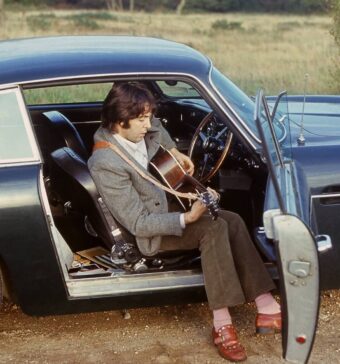
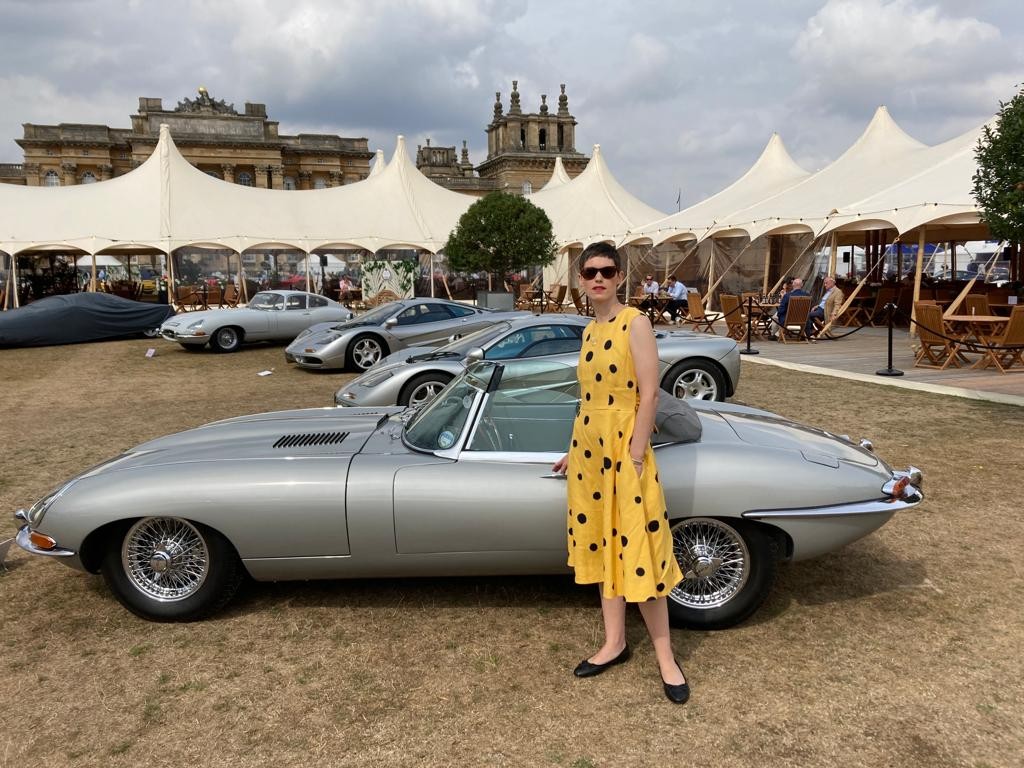
“What’s a Bond novel without an Aston Martin?” she adds. “I was inspired for Hurricane Room by a day at Thruxton Circuit, where I was taken out on the track by a retired racer in an Aston Martin Vanquish. My heart has never beaten so fast! I could do that every day.”