










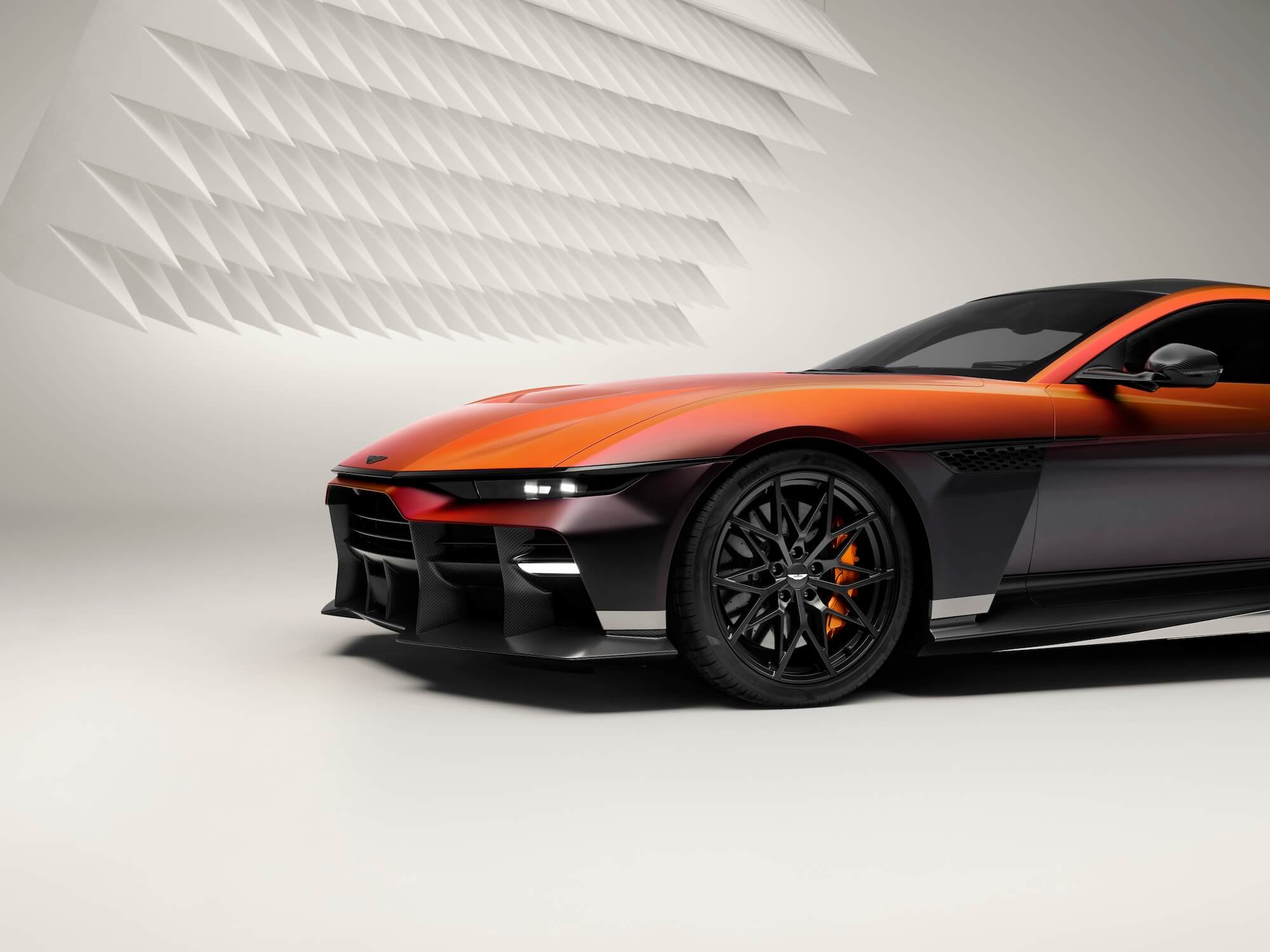
The numbers behind the Aston Martin Valen, which takes its name from the Latin word valens, meaning ‘strong’ and ‘powerful’, tell the story of a supercar with immense performance. Powered by an uprated 5.2-litre Twin-Turbocharged V12 developing 850PS at 6,500rpm and 1,000Nm of torque from just 2,500 rpm, the limited-edition special debuts as the world’s most powerful front-engined car, capable of 214mph and 0-62mph in just 3.1 seconds.
As with all specials, Valen is the work of two distinct but complementary divisions: Q by Aston Martin, the marque’s bespoke arm, embedded from the outset to push how far personalisation can go, and Aston Martin’s Special Vehicle Operations (SVO) – the team responsible for engineering and delivering the marque’s most highly customised, ultra-exclusive and performance-focused cars.
Valen’s world-beating performance may be the defining talking point, but its most potent quality cannot be reduced to mere metrics, as Alex Long, Managing Director of SVO at Aston Martin,[b][c] explains: “Valen is a very emotional car, with a depth of engineering we have been working on for quite some time. Everything that shapes the sensation of driving it, we’ve touched.”
Indeed, Valen is underpinned by one of the most comprehensive engineering programmes ever applied to an Aston Martin special, including extensive powertrain calibration, chassis upgrades, and weight savings of up to 110 kg, delivering a transformation in dynamics that is immediately, viscerally apparent. “The result is a unique combination of the new V12 and a very direct chassis construction – one that connects the driver to the road in a way that feels closer to a race car,” Long continues.
Limited to 150 cars worldwide and emerging from the longest development process the marque has ever undertaken for a special, Valen presented the Aston Martin Design Studio with the opportunity to explore and express more extreme emotions, too.
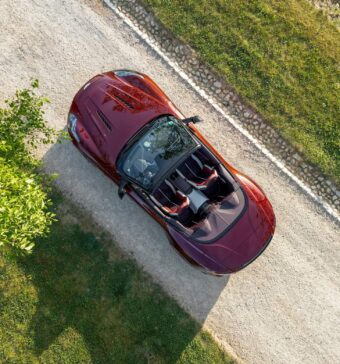
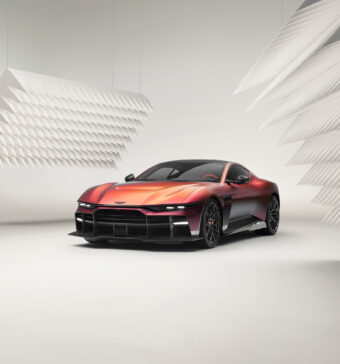
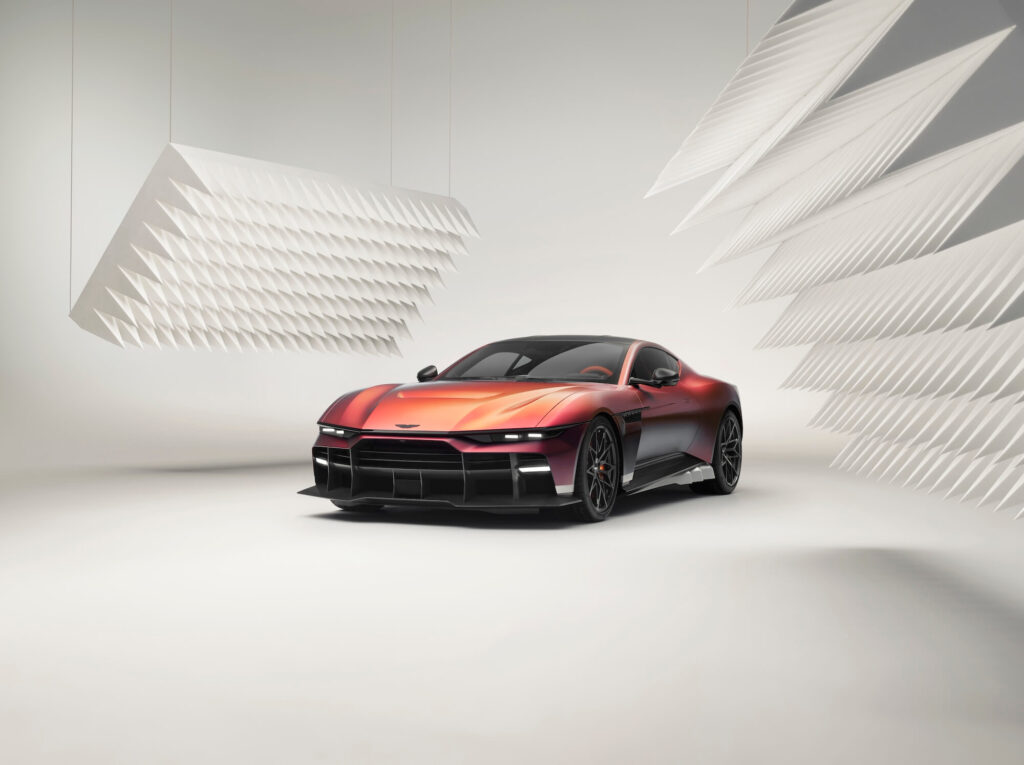
Valen’s standalone styling shares nothing with existing production models and was created to provoke the strongest reaction yet. Clad in a full-carbon fibre body, Valen’s attacking stance emphasises its front-engine rear-drive layout, its sharply sculpted lines reflect the supercar’s aggressive dynamics, and a new interior for the driver-focused cabin creates a more sporting cockpit environment.
“Every special has to have technical innovation and differentiation, remarkable coachwork and styling. You can also take far more risks; specials can act as spearheads and can take us into new areas and new places first,” says Long. “Valen has a very technical design language, but the sum of its parts is this futuristic look at where Aston Martin could go. So it’s exciting across almost every dimension of the senses.”
And despite its progressive design, Valen remains an unmistakably Aston Martin flagship. “If specials are disconnected from the core to the point where the flow through and the resemblance isn’t there, then they don’t perform that role,” Long adds.
Unveiled to the world at the 75th Pebble Beach Concours d’Elegance, the first of many such stages it will grace, Valen takes its place among the pantheon of greats, just as its V12 predecessors before it. A position that, as Long points out, is hard-earned.
“All specials are difficult – that’s what makes them worth doing,” he says. “It’s also what makes them the concours cars of the future. Because if it were easy, anyone would do it.”
A radical re-interpretation of the iconic front-engined formula, Valen makes a powerful statement about the shape of things to come for the great British marque.
AN EMOTIONAL DESIGN
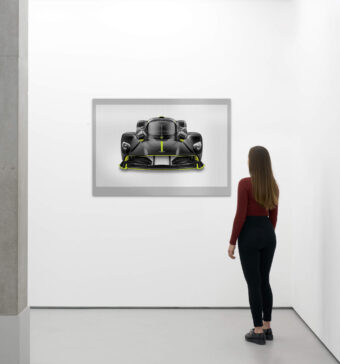
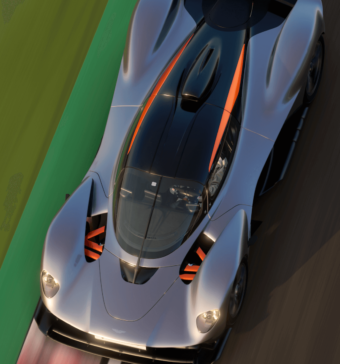
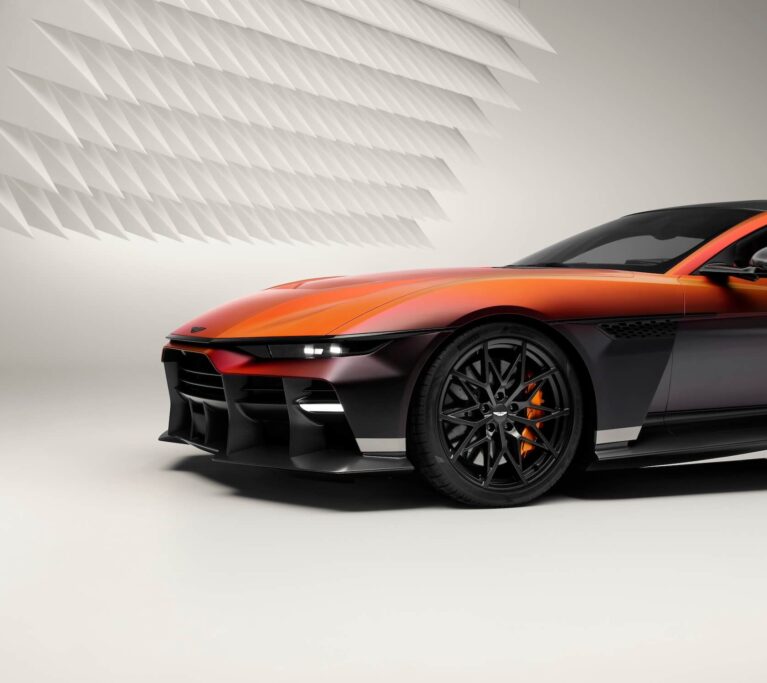
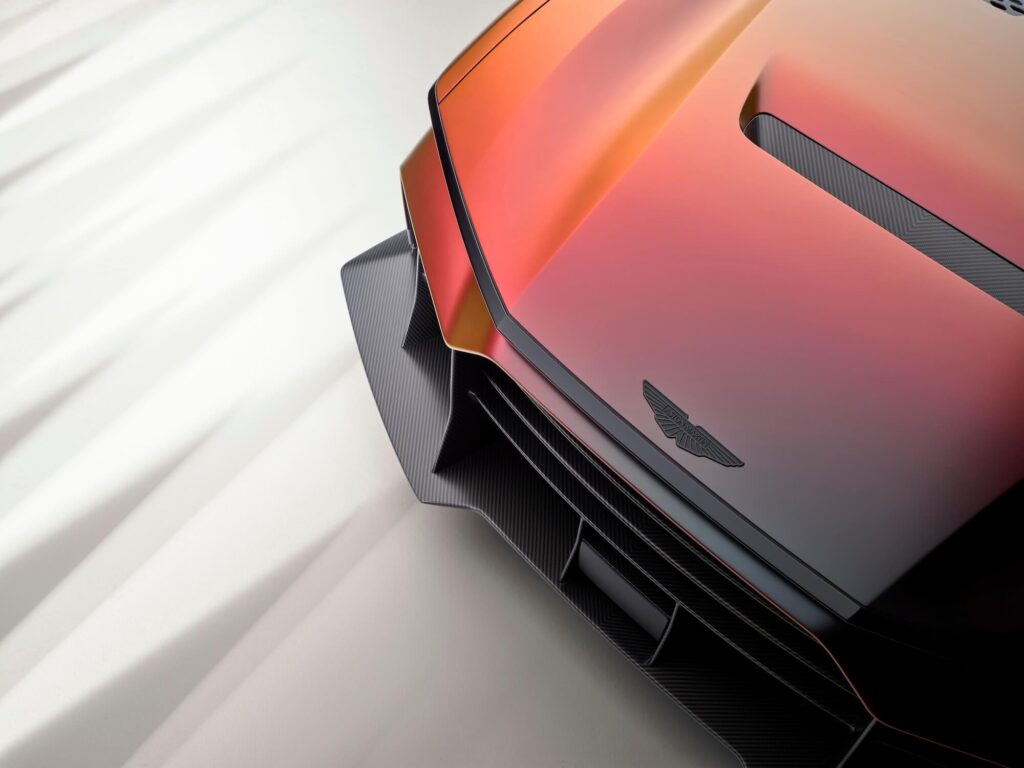
Front: Valen’s deeply recessed slimline headlamps sit beneath the sharp leading edge of a plunging bonnet line. The bold geometric mesh grille, angular radiator aperture and acutely angled front splitter combine to create a transformed face.
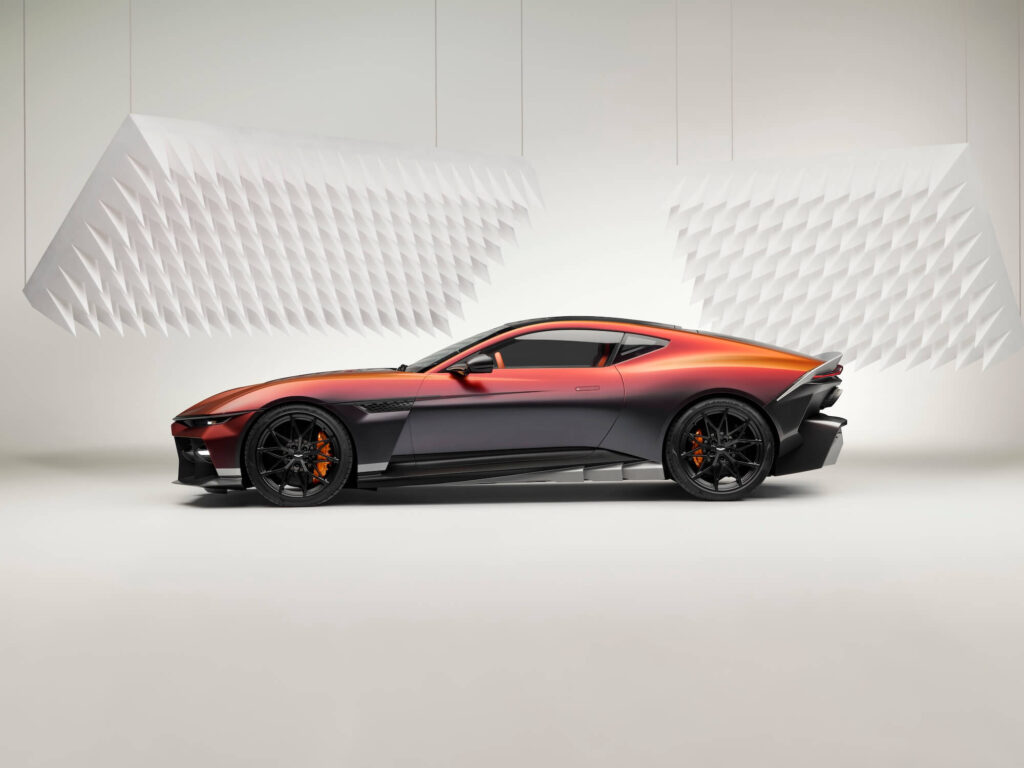
Side: The traditional side strake has been sharpened, elongated and fully integrated into a large functional vent, extracting air from the wheel arch and guiding it along the flanks. Saw-tooth vortex generators on the trailing edge of the stepped sills pull high-speed airflow from beneath the car to reduce lift and generate downforce.
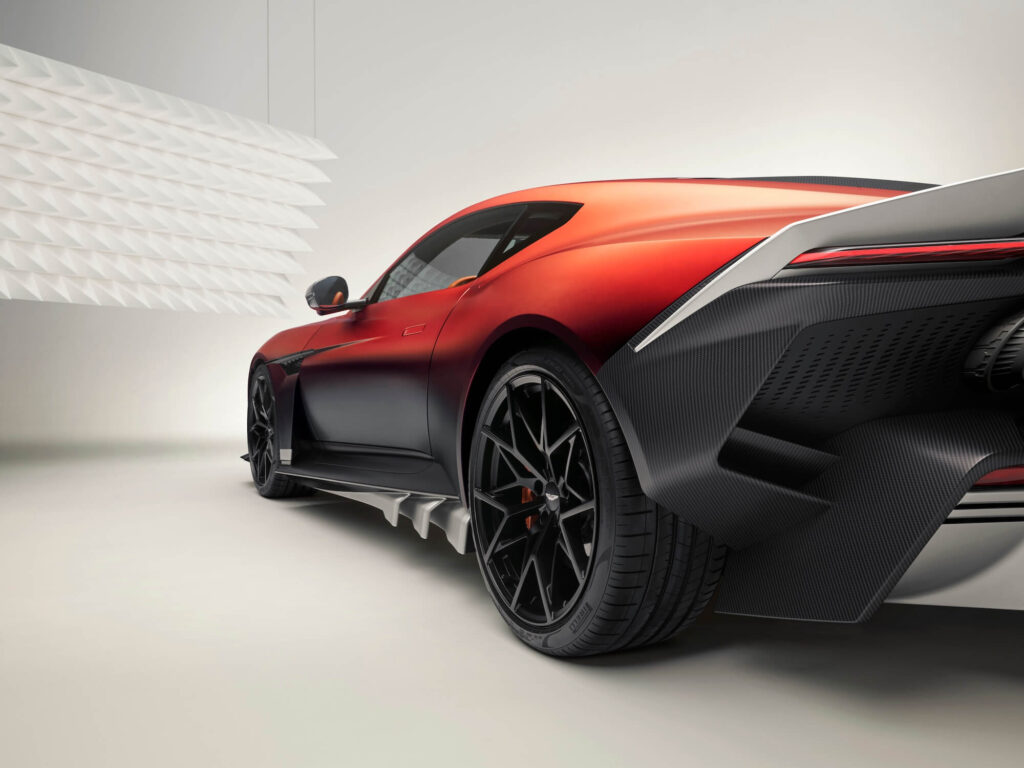
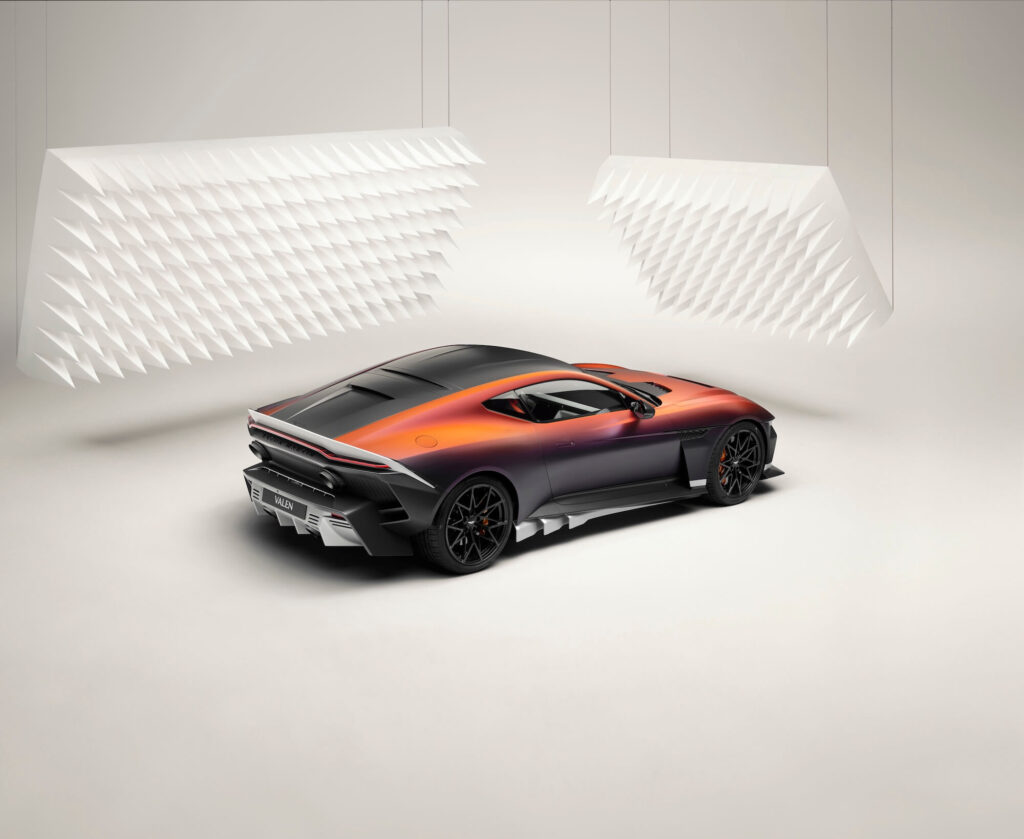
Rear: Valen’s solid tailgate replaces a conventional rear window and trunk lid, incorporating an aerodynamic wing in its upper section. A bespoke full-width light bar sits beneath the upswept tail – acting as a Gurney flap for downforce – while twin high-set tailpipes deliver a soundtrack befitting a V12 supercar.
A POWERFUL BLOODLINE
2009 – Aston Martin debuts One-77, its first front-engined V12 supercar. Powered by a 7.3-litre 750PS Cosworth-tuned V12, it was the most powerful naturally-aspirated supercar in the world at the time.
2015 – Aston Martin launches Vulcan, its first dedicated track-only special, built on an extensively modified One-77 chassis and fitted with a bespoke 7.0-litre 831PS V12.
2020 – Aston Martin delivers Victor, a unique one-off commission built by its in-house bespoke service, Q by Aston Martin, using the One-77 as its base while drawing design inspiration from the 1970s V8 Vantage.
2023 – Aston Martin creates Valour, a limited-edition special honouring 110 years of the marque. Directly inspired by Victor, it paired a 5.2-litre Twin-Turbocharged V12 with a six-speed manual gearbox.
2024 – Aston Martin builds the Valiant after Fernando Alonso requested a more track-focused version of Valour. The result was the most extreme front-engined road car Aston Martin has ever manufactured.
2026 – Aston Martin unveils Valen, powered by an uprated 5.2-litre twin-turbocharged V12 developing 850PS, making it the most powerful front-engined car in the world – and the most powerful front-engined Aston Martin in the company’s 113-year history.